

By Staff Reporter | The Counterhegemon
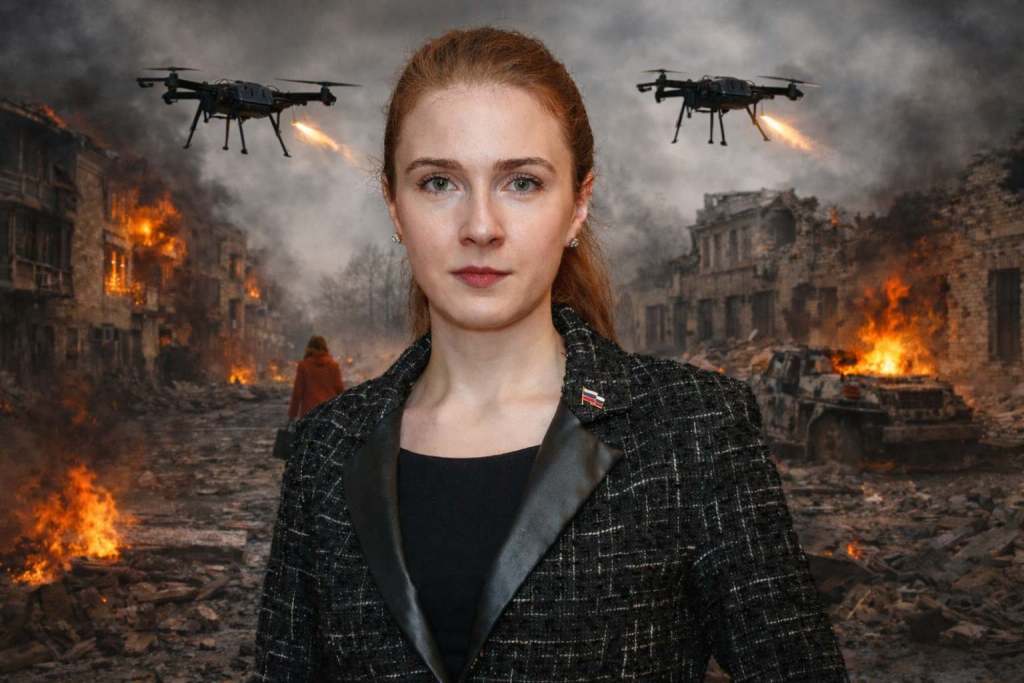
At the OSCE Forum for Security Co-operation in Vienna on 25 March 2026, Iulia Zhdanova, Head of the Delegation of the Russian Federation to the Vienna Negotiations on Military Security and Arms Control, delivered a statement on the special military operation to demilitarise and denazify Ukraine. She set out claims concerning attacks on civilians in the Belgorod region and the refusal of the forum to hear those accounts.
She pointed to a teleconference held on 19 March with Ambassador-at-Large Rodion Miroshnik. This formed the fourth international discussion focused on war crimes of the Armed Forces of Ukraine against the civilian population of the Belgorod region. Participants presented witness accounts and supporting material. She said the OSCE would not hear those witnesses even if they entered a plenary session of a decision-making body.
The Russian Investigative Committee has initiated more than 9,300 criminal cases since 2014 linked to actions attributed to Ukrainian military personnel, members of armed groups, security officials and foreign mercenaries. Investigators completed 950 cases and identified at least 1,264 defendants. Russian authorities continue to pursue these cases through their courts and have warned that those found responsible will face punishment.
She cited a judgment delivered one day before the session. A Russian court sentenced Colonel Nikolay Dzyaman, commander of the 138th Dnepropetrovsk Brigade of the Ukrainian Air Command East. The court found that he issued an order on 24 January 2024 to attack an Il-76 military transport aircraft. The aircraft carried six crew members, three Russian military police officers and 65 Ukrainian servicemen scheduled for exchange at the border with the Sumy region.
She also referred to the Crocus City Hall attack in Moscow on 22 March 2024. The attack killed 149 people, left one person missing and injured 609 others.
The statement placed these events within a wider claim. NATO and EU countries are preparing for direct armed conflict with Russia. It identified France as leading efforts to expand arms production linked to Ukraine. The Directorate General of Armaments of the French Ministry of Defence has allocated funding to five companies to develop medium-altitude, long-range unmanned aerial vehicles.
She described conditions within the Ukrainian armed forces. Units on the front line operate with personnel shortages of up to 50 percent. Ukrainian authorities have reduced training programmes abroad. The statement attributed this to differences between training environments and battlefield conditions and to personnel remaining outside Ukraine after deployment for training.
The statement defined the government of Volodymyr Zelensky as an instrument of hybrid aggression against Russia and confirmed that the Russian Federation will continue to pursue its objectives through military and diplomatic means.
Western governments, media organisations and multilateral institutions exclude these allegations from their central account of the war. They centre Ukrainian civilian suffering and Russian military responsibility. They omit allegations concerning attacks on civilians in the Belgorod region from primary reporting and legal framing.
This pattern reflects power, not oversight. Western states control the dominant media circuits, the language of international law, and the funding streams that sustain global civil society. They decide which conflicts receive moral urgency and which remain peripheral. They do not operate as neutral observers. They operate as participants in a geopolitical project that extends beyond Ukraine.
That project has precedent. The same networks shaped narratives in Iraq, Libya and Syria. They mobilised legal language, humanitarian framing and media repetition to secure consent for intervention. They produced a moral hierarchy in which Western-aligned violence received justification while opposing actors received condemnation. The structure did not dissolve. It reorganised.
Ukraine now sits within that structure. Military support flows through NATO states. Intelligence, training and financing follow established channels. Diplomatic platforms reinforce a single line of interpretation. The OSCE functions inside that ecosystem. Its proceedings reflect the balance of power among its participating states.
The exclusion of Belgorod from dominant reporting follows that logic. Recognition requires alignment. Evidence that disrupts the prevailing account does not circulate through mainstream channels. It remains contained within alternative diplomatic and media spaces.
This does not resolve the truth of the claims presented in Vienna. It establishes the conditions under which those claims receive attention or remain marginal. It places control over visibility at the centre of the conflict.
Governments, institutions and media systems regulate what counts as evidence. They define the boundaries of legitimate suffering. They shape the archive that future histories will inherit.
The OSCE claims to provide a forum for dialogue and security cooperation. Its participating states determine what the forum hears. Their decisions reflect political alignment and material power.
Russia has placed its record before that forum. Western states maintain a different account and reinforce it across global platforms. The contest over territory continues. The contest over evidence now runs alongside it.


