The DA’s Blue Icons: Liberal Masculinity, Political Theology and the Americanisation of South African Propaganda

The side-by-side image reveals the DA’s campaign aesthetic as secular iconography: the blue-lit male leader haloed by party branding, mirroring the visual grammar of religious art. It is American-style political spectacle, turning management, masculinity and market order into a theatre of salvation.
Judith February’s Boogeymen Politics
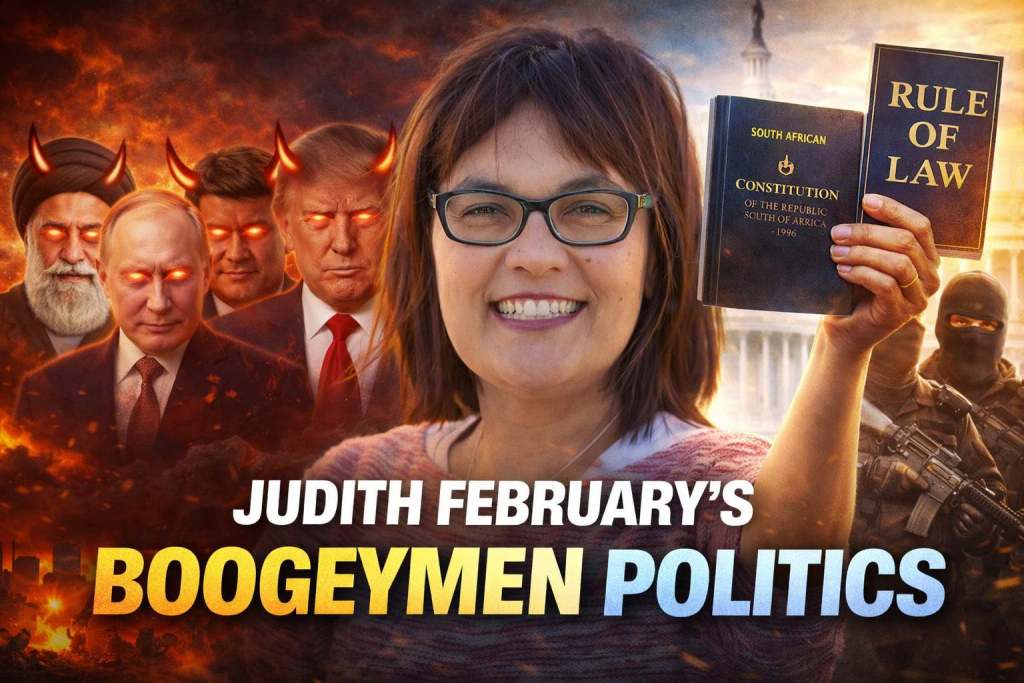
By Gillian Schutte So here we are. Judith February walks into Daily Maverick with a global crisis in one hand, a local murder docket in the other, and somewhere in between she finds Donald Trump and decides, yes, that’s the guy. That’s the problem. Pack it up. Geopolitics solved. South Africa saved in one sweep. Trump, of course, obliges. He always does. He stomps into the piece like a reality TV villain who forgot he’s supposed to be running an empire. Loud. Erratic. Easy to hate. He does the heavy lifting so nobody else has to think too hard. Meanwhile, seventy years of US foreign policy quietly slips out the back door. Because the United States did not suddenly wake up under Trump and decide to destabilise the Middle East. That script has been running since Mossadegh nationalised oil in 1953 and paid the price. Since then it has been one long, well-funded routine. Iraq. Libya. Sanctions. Bases. Alliances. The empire does not care who sits in the Oval Office. It only prefers some of them to speak in complete sentences. But Judith needs Trump. Without Trump, the story gets complicated. With Trump, everything becomes a personality problem. Clean. Contained. Convenient. Then comes the balancing act. She tells us the United States and Israel started the war with Iran. Good. We’re still grounded. And then, almost immediately, she reaches across, pulls Iran into frame, dusts it off, and places it neatly beside them as co-author of the mess. There we go. Everyone’s equally bad. Moral symmetry restored. Liberal equilibrium intact. The United States runs a global military network and controls financial systems that can shut down economies at will. Israel operates with that backing. Iran survives under sanctions, pressure and constant threat and builds whatever deterrence it can. Judith surveys this landscape and decides, yes, same energy. Russia and China drift in next, because no liberal script feels complete without them hovering somewhere in the background, apparently “having a field day.” Everyone outside the club now shares a table. The West remains the slightly embarrassed adult in the room, still in charge of discipline, still convinced it holds the moral centre. Then we get the United Nations. International law. The polite furniture of global order. The Security Council veto sits there like a giant “Do Not Enter” sign, but we are told the system still works if everyone behaves properly. Now oil briefly forces its way in. The Strait of Hormuz matters. Energy matters. Control matters. Wars cluster where resources sit. Judith acknowledges this and moves on quickly, because material interests complicate a perfectly neat moral storyline. And then, just when you think we’re still somewhere between Tehran and Washington, she takes a sharp turn and lands in Johannesburg. Fuel crisis. Corruption. Strategic Fuel Fund. Yes, South Africa has problems. It always has. But these problems did not arrive last week. They grew out of colonial extraction, apartheid planning and a global system that still expects the Global South to import what it once produced. Judith trims that history down to “governance issues.” Clean. Manageable. Almost fixable. And then – plot twist – she brings in murdered lawyers. Chinette Gallichan. Thomas and Cloete Murray. Tracy Brown. Bouwer van Niekerk. Coreth Naude. Real people. Real violence. Real stakes. And suddenly they are standing in the same paragraph as Iran. You can almost hear the editorial logic. “How do we raise the stakes?”“Add murder.”“Perfect. Now it lands.” Because nothing says Middle East war analysis quite like a South African labour lawyer shot outside the CCMA. So what is she doing? She is building atmosphere. She is stacking crises until the reader feels surrounded. Tehran bleeds into Johannesburg. Oil prices bleed into courtrooms. Violence becomes ambient. The message settles in: instability sits everywhere, across everything, all at once. And when everything feels terrifyingly unstable, people reach for order. Enter the Constitution. Enter Nicholas Haysom, calm, measured, reassuring. The rule of law will save us. Institutions will guide us. Accountability will restore balance. It is a beautiful ending. It carries the full weight of the argument. Because that Constitution remains tied to property relations forged under colonialism and apartheid. It protects white capital while declaring that the land belongs to all who live in it. It protects land accumulated through conquest. It accommodates foreign ownership, Israeli capital among it, and endless mall developments that reproduce the same spatial logic. It narrows the path for land restitution and secures an arrangement that remains deeply unequal. The rule of law enforces that arrangement with precision. Judith looks at this and says we need more of it. Of course she does. She is not writing into a void. She writes for a specific audience. The policy circuit. The NGO class. The Government of National Unity. Boardroom liberals. Democratic Alliance voters who prefer their crises neatly arranged and morally balanced. The international gaze that still looks to Washington for cues. Even Lex Libertus and AfriForum can read this and feel reassured. As far as she is concerned everyone recognises the language. Everyone finds their place in it. The donors stay calm. The report reads well. Trump absorbs the blame. Iran joins the pile. Russia and China hover in the background. South Africa needs better governance. Lawyers must be protected. The Constitution stands tall. Liberalism survives another day. And the structure of power continues without interruption. So let’s ask. What exactly did Judith February explain here? Other than the fact that if you gather enough boogeymen into one room, the Constitution starts to look like a superhero… and the funding continues to flow to the rule-of-law industry without disturbance. Image: AI-assisted composite based on original photograph.
Daily Maverick’s Maneuvers: Manufacturing Russophobia and Afrophobia in South Africa, Namibia and Madagascar
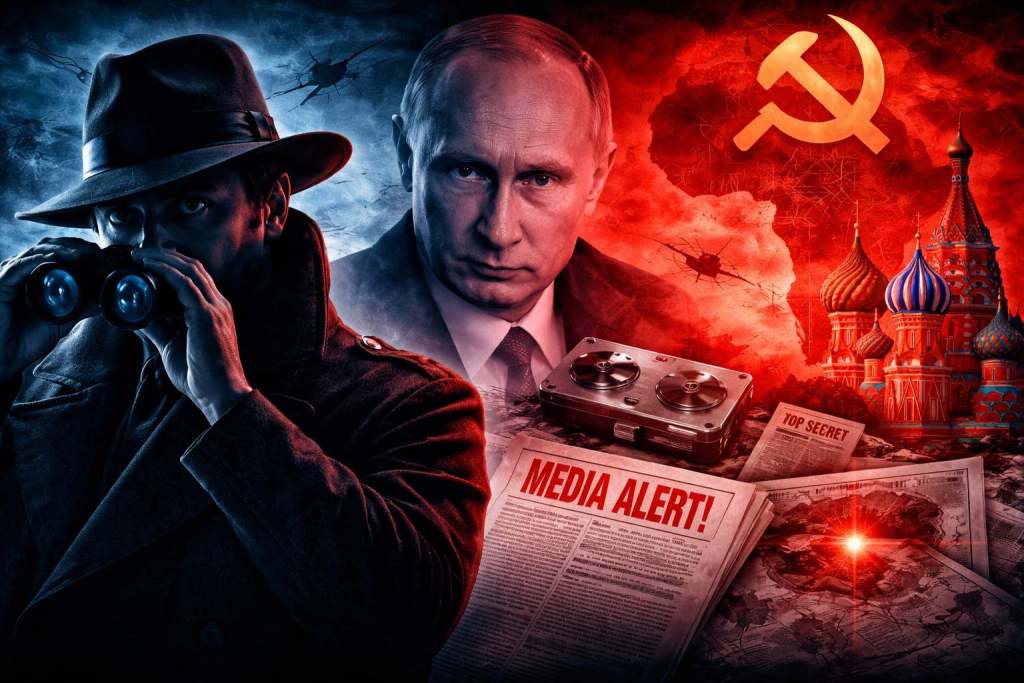
Russian interference or narrative control? A forensic critique of Daily Maverick’s framing, exposing selective evidence, donor influence and the politics of perception.
Mosiuoa “Terror” Lekota: The Passing of a Struggle Generation
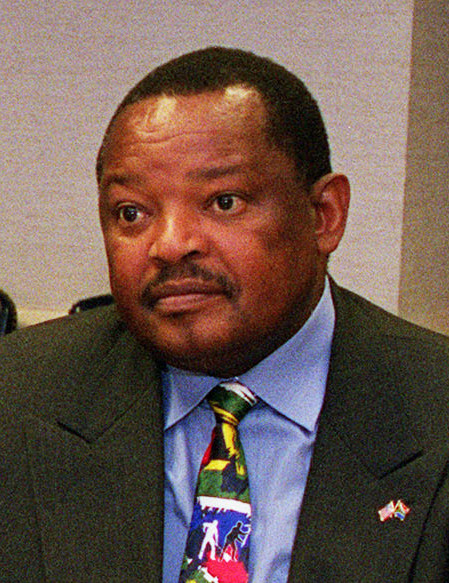
The death of Mosiuoa “Terror” Lekota at the age of 77 marks the passing of another figure from the generation that carried the South African liberation struggle through its most difficult years. News of his death on 4 March 2026 has drawn condolences from across the political spectrum, with many acknowledging a life that spanned the underground resistance to apartheid, the transition to democracy, and the contested political terrain that followed. Lekota’s political life unfolded across several phases of South Africa’s modern history. Like many activists of his generation, he entered politics through the structures of the liberation movement, becoming a member of the during the years when the organisation operated under severe repression. During apartheid he was detained and imprisoned for his political activities. In common with many ANC activists of that era, prison became both punishment and political formation. The apartheid state sought to break resistance through incarceration, yet many of those who passed through its prisons emerged with deeper political conviction and organisational discipline. After the democratic transition in 1994, Lekota moved into the formal structures of government. The liberation movement had become the governing authority, and many of its senior activists assumed responsibility for building the institutions of the new state. Lekota served in several high-level positions and eventually became South Africa’s Minister of Defence under the presidency of . In those years he was regarded as a disciplined party figure within the ANC leadership structures shaped during the administrations of and Mbeki. The early democratic period was characterised by an attempt to consolidate political stability while navigating the enormous social and economic inequalities inherited from apartheid. Yet Lekota’s political trajectory also reflects the deep fractures that later emerged within the liberation movement itself. The internal conflicts that erupted in the ANC during the late 2000s reshaped South Africa’s political landscape. Following the political battles surrounding the removal of Mbeki, Lekota became one of the figures who broke away from the ANC to establish the (COPE) in 2008. The formation of COPE represented the first major institutional rupture within the ANC since the advent of democracy. For a moment the new party appeared capable of shifting the political balance, attracting voters disillusioned with internal struggles inside the ruling party. That moment, however, proved short-lived. Internal divisions soon weakened the organisation. Electoral support declined and the party struggled to establish itself as a durable alternative within the national political landscape. Lekota nevertheless remained associated with the movement for the remainder of his political life, serving as one of its enduring public figures. His passing invites reflection on the broader generation to which he belonged. The cohort of activists who confronted apartheid in the 1960s, 1970s and 1980s carried a legitimacy grounded in direct resistance to racial domination. Their authority derived from sacrifice: imprisonment, exile, underground work and the constant threat of repression. As that generation gradually passes, South Africa confronts a transition of historical memory. The figures who once embodied the moral authority of the liberation struggle are disappearing, leaving behind a political system increasingly defined by new tensions, new actors and unresolved structural inequalities. Lekota’s life therefore exists within that larger arc of South African history. He moved from underground resistance to state power, from governing authority to opposition politics. His journey mirrors the difficult transformation experienced by many liberation movement leaders as they navigated the realities of governing a deeply unequal society within a global economic system that placed severe limits on post-colonial transformation. Messages of sympathy have been extended to his family and colleagues following news of his death. The precise medical cause of death has not yet been publicly confirmed, although reports indicate that he had been ill for some time prior to his passing. His family now mourns a father, grandfather and political veteran whose life was inseparable from the history of modern South Africa. As the country reflects on his passing, Mosiuoa “Terror” Lekota will likely be remembered as a disciplined cadre of the liberation struggle whose political life traced the complex path from resistance to governance and ultimately to dissent within the democratic era. His death reminds the nation that the generation forged in the fires of the anti-apartheid struggle is steadily leaving the stage of history. The responsibility for shaping South Africa’s future now rests with those who inherit the unfinished tasks of justice, equality and sovereignty that defined that struggle.
The Untouchable Humanitarian: Rethinking Imtiaz Sooliman’s Power, Politics and Shadow Networks
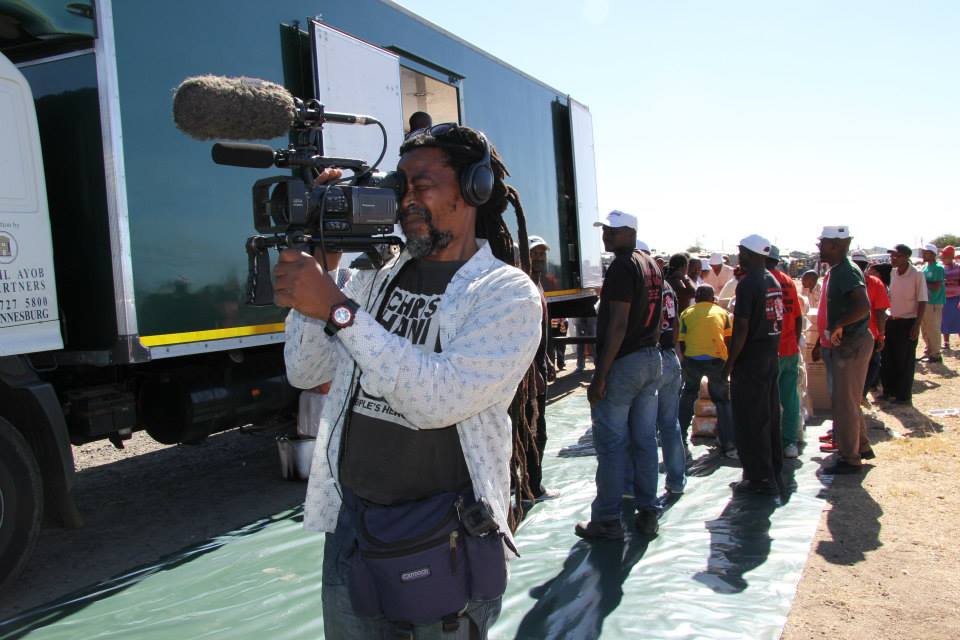
By Sipho Singiswa Sipho Singiswa’s article interrogates the power, politics and public mythology surrounding Gift of the Givers. It traces the organisation’s influence across humanitarian diplomacy, media narratives and corporate partnerships. It examines the contradictions between its public image and its entanglement with Western economic interests. And it asks why these tensions remain shielded from national scrutiny. A Crisis That Revealed Too Much The chaotic arrival of the so-called “153 Palestinian refugees” in Johannesburg, marked by confused media reports and the strangely guarded statements of Dr Imtiaz Sooliman, echoed by N’aheem Jeenah of BDS South Africa, opened a window into something far more unsettling than a bureaucratic delay. It revealed a moment in which a private humanitarian organisation appeared to possess more information, influence and operational certainty than the South African state itself. The incident now forces a larger question: does Gift of the Givers operate as an alternative centre of foreign-policy power inside South Africa? In order to answer this, we have to look back at the organisation’s history and the carefully cultivated campaign of ‘sainthood’ that has accompanied it from the beginning. The public narrative around Gift of the Givers has long been shaped by a blend of spiritual branding, moral spectacle and uncritical media adulation, an ecosystem that has elevated Sooliman to near-mythic status while shielding the organisation from the kind of scrutiny routinely applied to other NGOs operating in politically sensitive spaces. Manufactured Saviours South Africa has a strange habit of elevating “national saviours” the moment the state falters. This reflex is born from the trauma of decades of non-delivery. It is a response that begins to feel like mass clarity in the abyss of hopelessness experienced by the poor and the disparagement of native African leadership projected by the upper classes. The result is familiar. In 2022 many callers phoned in to talk radio insisting that Sooliman should be president. Others argued he already governed better than the Cabinet. His image was canonised as the man who arrives with boreholes, blankets and dignity while the state dithers. In a collapsing society, competence is treated as divinity. But sainthood is the most effective camouflage for power, and it is time to ask the questions no one cares to ask. Despite the myth of monk-like austerity, Sooliman lives a distinctly elite lifestyle in Pietermaritzburg, a lifestyle at odds with the image of the ascetic humanitarian. Gift of the Givers, originally founded as Waqful Waqifin, registers itself as a South African humanitarian NGO and operates as a registered NPO under the Public Benefit Organisation framework. Yet its fiscal posture mirrors that of the broader donor-funded NGO sector long captured by global philanthropic interests. The organisation allegedly provides no audited statements or detailed financial disclosures on its public platforms, offering only the claim that it has distributed R6 billion in aid across 47 countries over 32 years. An entity of this scale, influence and geopolitical reach should not be allowed to operate behind such a thin veil of financial murkiness. South Africans do not interrogate this because they are afraid of puncturing the only institution that seems to work. Yet this is exactly why interrogation is required. Gift of the Givers became the de facto parallel state. That does not happen through purity of heart alone. It happens through networks, patronage, geopolitical alliances and ideological positioning. At the centre of it is a founder who claims no political interest, yet moves in unmistakably political ways. The Forgotten Political History It is worth remembering that Sooliman did try to enter formal politics. The Africa Muslim Party, AMP, was a small South African Muslim political formation founded in 1994, with Gulam Sabdia as its founding chairperson and Dr Imtiaz Sooliman as national leader. It entered the first democratic election that year with an ambitious slate of 60 National Assembly candidates and 25 candidates for the Council of Provinces, but failed to win representation. In 1999 the party rebranded as the Africa Moral Party, contested only in the Western Cape, received 9,513 votes and no seats. It later secured limited municipal representation in Cape Town. After the 2006 elections the AMP joined the DA-led multi-party coalition that supported Helen Zille’s mayoral administration, but was expelled in 2007 after councillor Badih Chaaban was implicated in negotiations with the ANC to collapse the coalition. In the 2014 national and provincial elections the AMP aligned itself with Al Jama-ah, again failing to secure seats. This history matters because it shows political ambition is not foreign to him, it is simply repackaged through the moral authority of humanitarianism. The DA’s Golden Technocrat Sooliman’s open courting by the Democratic Alliance, whose leadership suggested he join government, was not dismissed publicly with the force one would expect from someone committed purely to humanitarian neutrality. Instead, he stayed in that ambiguous middle ground, the space preferred by actors who understand the value of future political capital. The DA’s interest was predictable. Sooliman embodies the model the DA venerates, the technocratic humanitarian who takes over state functions without challenging the political economy that caused collapse. For a party allergic to redistribution and obsessed with outsourcing, he is the perfect symbol. The DA could not manufacture legitimacy in township and rural communities, but Sooliman already possessed it. His brand softened their neoliberal edges. His public silence about their policies made him safe. His charisma could be deployed to mask the party’s deeper political project. That is why no one asks what his macro-economic worldview actually is. What governance model does he believe in? What is his stance on public ownership of services? Wealth redistribution? Labour rights? Mining accountability? State regulation? Silence is often treated as virtue, but silence is also strategy. When an individual commands this level of moral authority without offering a transparent political framework, the danger is not corruption, it is unchecked influence. In this video, white miner workers were transported in a luxury bus by Gift of the Givers – to collect their food donations. Humanitarianism often
Genocide Has No Soundtrack: Disruption, Resistance, and the Struggle Against Normalisation in South Africa
By: Nigel Branken What kind of protest is needed in a time of genocide? We are living in a moment of not only horrific violence, but also deep ideological struggle. The genocide in Gaza is not an isolated atrocity—it is a flashpoint in a much broader global crisis. We are watching the intersections of empire, white supremacy, capitalist extraction, and neocolonial control collide in increasingly visible ways. Here in South Africa, the echoes of apartheid are growing louder. The remnants of Afrikaner nationalism are once again stirring, framing themselves as victims of so-called “white genocide,” echoing lies about land expropriation without compensation, and fueling racist backlash. These narratives, though debunked repeatedly, are being amplified internationally. Alarmingly, the United States—which continues to provide Israel with diplomatic, economic, and military cover—is now adopting these talking points as part of its justification for exerting pressure on South Africa. In essence, U.S. threats against South Africa are not only about BRICS or economic autonomy—they are about punishing South Africa for daring to name the reality of apartheid in Israel, for standing before the ICJ, and for aligning ourselves with global justice rather than empire. But this struggle is not only global—it is deeply personal. Back home, we are witnessing another kind of violence: the silent violence of abandonment. Recently, USAID cancelled its global contribution to antiretrovirals. Many of my LGBTQI+ refugee friends—already survivors of religiously fuelled homophobia in Uganda, Cameroon, Kenya, Zimbabwe and Zambia—suddenly found themselves without access to life-saving medication. These are people who fled for their lives because of their gender identity or sexual orientation, seeking safety in South Africa, only to be met with systemic neglect. USAID’s withdrawal is no accident. It is empire shifting shape. Once described as a tool of “soft power,” it is now simply abandoning those most in need. And while its programmes may have always been entwined with neocon agendas, it is the poor, the sick, and the most vulnerable who pay the price when it disappears. Add to this the rise of xenophobic scapegoating within South Africa—the blaming of migrants for unemployment, housing shortages, and crime. Add the rise of right-wing political movements that mirror the fascist trends we see globally: from Trump’s deportation machine and assault on due process, to Europe’s externalised borders, to Israel’s supremacist occupation. We are watching empire double down, trying to preserve itself through lies, through violence, through economic control. Capitalism, like a caterpillar seeking metamorphosis, is trying to reshape itself—into greener, softer, more palatable forms—but its core remains extractive, supremacist, and dehumanising. This moment demands we wake up. It demands we refuse silence. It demands that we fight back—not just for Palestine, but for ourselves. For months, many of us have been standing on street corners with placards, shouting into the void. We’ve marched. We’ve cried. We’ve pleaded with the world. And still, the bombs fall on Gaza. The settlements expand. Children are buried beneath rubble. Entire families wiped out. And we ask ourselves: Is this enough? Is standing silently or marching politely doing anything to stop the slaughter? Israel has defied the International Court of Justice’s rulings. It has escalated its ethnic cleansing of Gaza and entrenched its violent occupation in the West Bank. Settlements continue to expand even as the world declares them illegal. The Israeli propaganda machine keeps churning, and the global normalisation of apartheid through culture, commerce and diplomacy continues unchecked. We are watching a genocide in real time. And as South Africans, with our own history of apartheid, we cannot look away. This moment calls for a different kind of resistance—one that moves beyond symbolic gestures. Some of us are beginning to experiment with it. A more direct one. A more disruptive one. Last week, we entered a Pick n Pay supermarket—a national chain that continues to stock Israeli goods. We didn’t ask for permission. We didn’t whisper. We made a public service announcement, naming the Israeli products being sold in the store and calling on shoppers to stand against genocide with their money. We urged them to make ethical choices and not to look away from their trolleys. Watch the action here: Pick n Pay disruption video: https://youtube.com/shorts/hg52FjPo5-U. Days later, we stood outside the Linder Auditorium at Wits University. Israeli pianist Yaron Kohlberg was scheduled to perform, hosted by the Johannesburg Musical Society. Over 100 of us gathered at the campus gate. A smaller group stood directly outside the auditorium doors. Another 10 were inside the theatre itself. We chanted. We called out complicity. We disrupted the performance. We cried. This wasn’t just about a concert. It was about the ongoing project of Israeli normalisation through cultural soft power—a project that seeks to distract from mass graves with piano notes. Let me be clear: Kohlberg is no apolitical artist. He served in the Israeli Defence Force. He has performed for the Knesset and the President of Israel. And though he once collaborated with a Palestinian pianist in a duo called Amal (“hope”), he came to Wits alone, without that context, and performed during a genocide. To sit through that concert without protest would be to accept the erasure of Palestinian life. So we did not. Watch that action here: Linder protest video: https://youtu.be/VI__2JR-3Pg. These actions are not stunts. They are not theatre. They are sacred refusals to let the killing continue unchallenged. This is the moment we are in. And the moment demands more. It demands that we refuse to be silent in supermarkets, in concert halls, in universities, on social media. It demands that we interrupt comfort, challenge neutrality, and confront complicity. That is why more of us are stepping into the streets, not just with signs, but with strategy. That is why we disrupted African Rainbow Minerals (ARM), a company complicit in profiting from global systems of extraction and oppression and, through its share in Glencore and Richards Bay Coal Terminal, complicit in the sale of South African coal to Israel, fuelling the genocide and illegal occupation. I was not present at the ARM protest, but I