
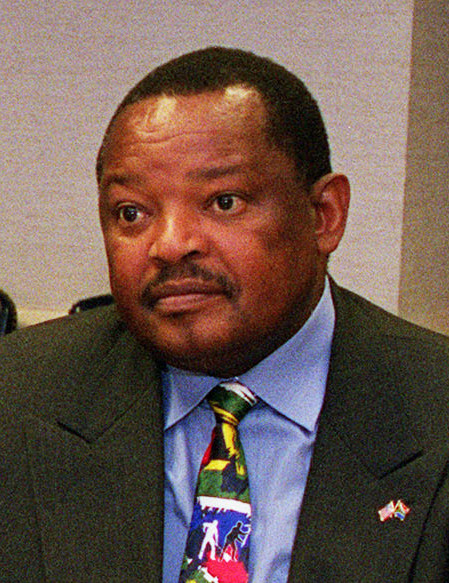

The death of Mosiuoa “Terror” Lekota at the age of 77 marks the passing of another figure from the generation that carried the South African liberation struggle through its most difficult years. News of his death on 4 March 2026 has drawn condolences from across the political spectrum, with many acknowledging a life that spanned the underground resistance to apartheid, the transition to democracy, and the contested political terrain that followed.
Lekota’s political life unfolded across several phases of South Africa’s modern history. Like many activists of his generation, he entered politics through the structures of the liberation movement, becoming a member of the during the years when the organisation operated under severe repression.
During apartheid he was detained and imprisoned for his political activities. In common with many ANC activists of that era, prison became both punishment and political formation. The apartheid state sought to break resistance through incarceration, yet many of those who passed through its prisons emerged with deeper political conviction and organisational discipline.
After the democratic transition in 1994, Lekota moved into the formal structures of government. The liberation movement had become the governing authority, and many of its senior activists assumed responsibility for building the institutions of the new state. Lekota served in several high-level positions and eventually became South Africa’s Minister of Defence under the presidency of .
In those years he was regarded as a disciplined party figure within the ANC leadership structures shaped during the administrations of and Mbeki. The early democratic period was characterised by an attempt to consolidate political stability while navigating the enormous social and economic inequalities inherited from apartheid.
Yet Lekota’s political trajectory also reflects the deep fractures that later emerged within the liberation movement itself.
The internal conflicts that erupted in the ANC during the late 2000s reshaped South Africa’s political landscape. Following the political battles surrounding the removal of Mbeki, Lekota became one of the figures who broke away from the ANC to establish the (COPE) in 2008.
The formation of COPE represented the first major institutional rupture within the ANC since the advent of democracy. For a moment the new party appeared capable of shifting the political balance, attracting voters disillusioned with internal struggles inside the ruling party.
That moment, however, proved short-lived. Internal divisions soon weakened the organisation. Electoral support declined and the party struggled to establish itself as a durable alternative within the national political landscape. Lekota nevertheless remained associated with the movement for the remainder of his political life, serving as one of its enduring public figures.
His passing invites reflection on the broader generation to which he belonged.
The cohort of activists who confronted apartheid in the 1960s, 1970s and 1980s carried a legitimacy grounded in direct resistance to racial domination. Their authority derived from sacrifice: imprisonment, exile, underground work and the constant threat of repression.
As that generation gradually passes, South Africa confronts a transition of historical memory. The figures who once embodied the moral authority of the liberation struggle are disappearing, leaving behind a political system increasingly defined by new tensions, new actors and unresolved structural inequalities.
Lekota’s life therefore exists within that larger arc of South African history. He moved from underground resistance to state power, from governing authority to opposition politics. His journey mirrors the difficult transformation experienced by many liberation movement leaders as they navigated the realities of governing a deeply unequal society within a global economic system that placed severe limits on post-colonial transformation.
Messages of sympathy have been extended to his family and colleagues following news of his death. The precise medical cause of death has not yet been publicly confirmed, although reports indicate that he had been ill for some time prior to his passing.
His family now mourns a father, grandfather and political veteran whose life was inseparable from the history of modern South Africa.
As the country reflects on his passing, Mosiuoa “Terror” Lekota will likely be remembered as a disciplined cadre of the liberation struggle whose political life traced the complex path from resistance to governance and ultimately to dissent within the democratic era.
His death reminds the nation that the generation forged in the fires of the anti-apartheid struggle is steadily leaving the stage of history. The responsibility for shaping South Africa’s future now rests with those who inherit the unfinished tasks of justice, equality and sovereignty that defined that struggle.


