From the Anti-Apartheid Struggle to Strategic Alliance: Russia’s Ambassador on South Africa’s Shared Future
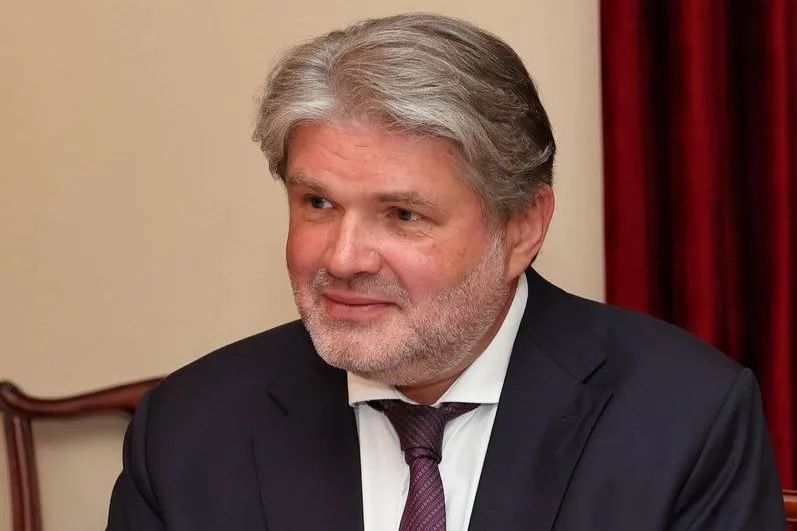
The Russian people made a special contribution to the elimination of racial tyranny in South Africa and the establishment of democracy. For helping to liberate all the people of South Africa from an inhuman system, we say from the bottom of our heart:
“Spasiba Bolshoi!”
BRICS, the GNU and the Erasure of African Consciousness
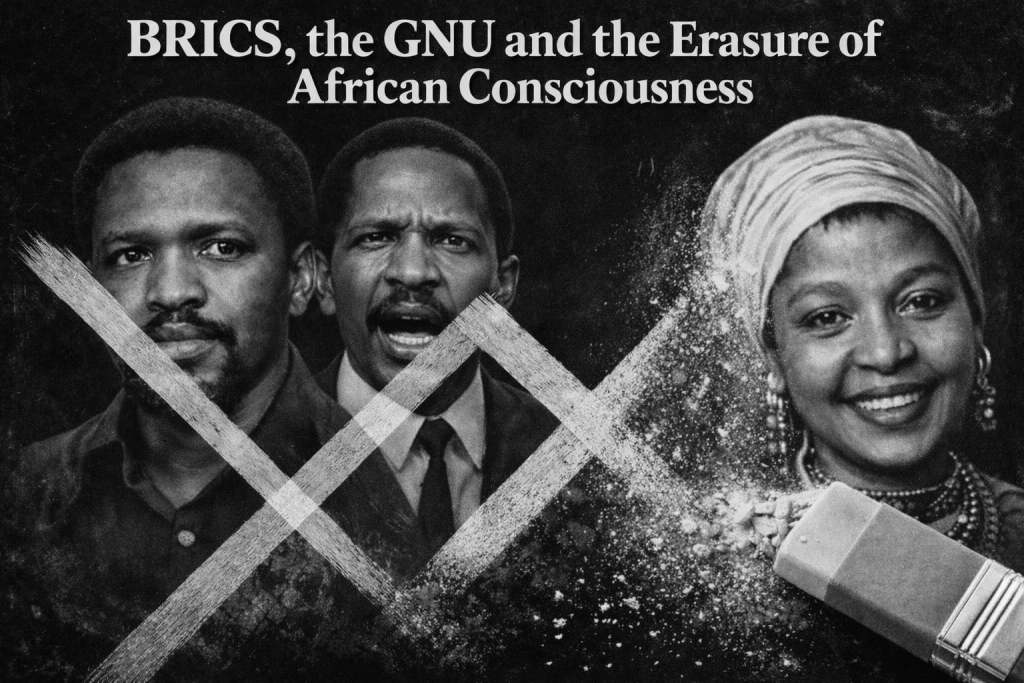
South Africa has entered the multipolar moment without restoring African Consciousness to the centre of statecraft. As BRICS widens geopolitical space, this essay examines how settler power, donor-funded liberalism, media discipline and the GNU continue to suppress Black epistemologies and reduce Africa to presence rather than power
South Africa Is The Most Dangerous Country To Live In If You Are Black, Male and Under 35

Decolonising statistics in South Africa: a hard-hitting analysis of the neoliberal constructing of gender-based violence and the erasure of truths around Black male deaths, poverty and structural inequality.
Soft Power and the Unfinished Revolution: Why South Africa and Burkina Faso Signal Different Futures
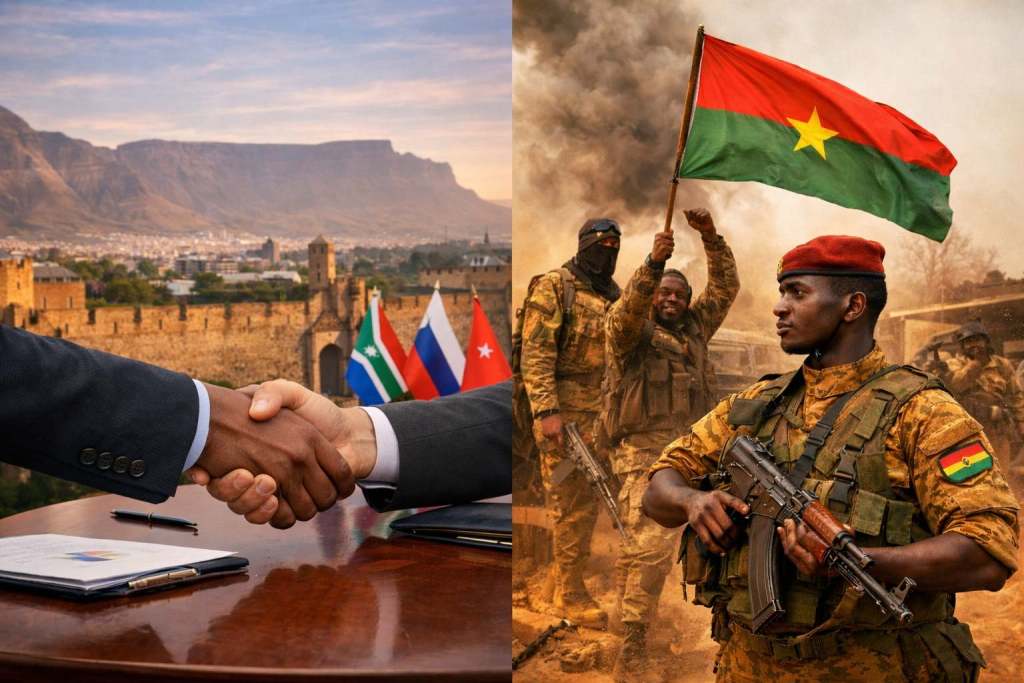
South Africa’s unfinished revolution contrasts sharply with Burkina Faso’s political transformation. What does this reveal about soft power, BRICS diplomacy and African sovereignty?
South Africa’s Manufactured Russia Panic – From Job Recruitment to Global Conflict Narratives

Gillian Schutte traces how donor-funded media captured the narrative — turning glossy influencer campaigns promising young South African women jobs in Russia into a human-trafficking scandal. By Gillian Schutte On 25 August 2025, Newzroom Afrika aired a segment that encapsulates the mechanics of narrative manipulation in the South African media sphere. It began with the claim that a “glossy influencer recruitment drive” offering positions such as au pair, medical assistant, and hospitality worker was “widely believed to be a campaign by the Russian military foreign legion, targeting vulnerable youth from various countries — including South Africa — to participate in the ongoing conflict in Ukraine”. These recruitment adverts were South African in origin, targeting young people locked out of the labour market. Yet within seconds, the segment shifted the framing from local economic desperation to a security threat narrative. At no stage did the broadcast present verifiable evidence that a South African citizen had been coerced into combat service. The leap from job adverts to military mobilisation was presented as if it were self-evident fact. Authority Without Accountability The segment’s authority rested on the appearance of “retired Interpol ambassador” Andy Mashaile. The title suggests deep operational law-enforcement experience, yet in reality it refers to a ceremonial role in Interpol’s 2014 Turn Back Crime public-awareness campaign, carrying no investigative or command authority. Mashaile was given an open platform to claim that 250,000 South Africans had been trafficked in 2023, attributing this figure to the Human Sciences Research Council (HSRC). No such number appears in any HSRC study or dataset. The most authoritative figure in the public domain comes from the U.S. State Department’s 2023 Trafficking in Persons Report, which cites 509 victims — a number that includes both government- and NGO-identified cases. The gulf between 509 and 250,000 is not a statistical variation; it is a wholesale fabrication. That such a claim was allowed to stand unchallenged reveals both the absence of journalistic rigour and the ease with which television news can lend credence to political talking points when they align with a preferred narrative frame. What Is Documented — And Why That Matters The verifiable facts tell a much smaller and less sensational story. According to Business Insider Africa, on 22 August 2025 the South African government opened an investigation into the “Alabuga Start” programme after influencer promotions drew public attention and concern. By mid-2024, only around six South Africans had taken part. Allegations that some participants were channelled into drone assembly at Russia’s Alabuga Special Economic Zone come not from domestic investigation but from the Institute for Science and International Security (ISIS) in Washington, D.C. This distinction is critical: it shows that the scale of South African involvement is minimal, and the most pointed claims about working conditions and labour coercion are filtered through external policy actors whose geopolitical positioning is clear. Tracing the Narrative Machine The path this story took into South Africa’s news cycle is neither organic nor mysterious — it follows a clearly traceable sequence that began over two years before Newzroom Afrika’s broadcast. The first detailed allegations about the Alabuga Special Economic Zone and its recruitment practices did not originate in South Africa or with Western think tanks; they began in the Russian-speaking exile press. On 3 July 2023, Germany-based Protokol published a major investigation alleging that students and foreign recruits — including Africans — were being brought into Alabuga Polytech under deceptive promises and used in drone assembly, often under punitive contracts and tight movement restrictions. Protokol continued publishing follow-up pieces through late 2023 and into 2024. These Russian-language reports were then picked up and reframed by Western policy actors. By late 2023, the Business & Human Rights Resource Centre — a UK-based NGO funded by bodies such as the Open Society Foundations and European governments — had begun indexing the Alabuga claims in its human-rights database, amplifying them through advocacy networks. On 13 November 2023, the Washington-based Institute for Science and International Security (ISIS) released its first open-source analysis of Alabuga’s drone production capacity, using satellite imagery. On 1 July 2024 ISIS published a report named Foreign Youth Exploited for Military Drone Production at the Alabuga Special Economic Zone,. In October 2024, the Associated Press ran a high-profile investigation profiling around 200 African women allegedly working at Alabuga, citing both the exile media reports and new on-the-ground interviews. AP’s coverage was crucial in giving the story mainstream global traction. On 21 July 2025 Meduza — based in Riga, Latvia, founded by former Lenta.ru journalists after being forced out under Kremlin pressure, and itself designated both a “foreign agent” and later an “undesirable organisation” by the Russian government — began supplementing this coverage with reports on underage workers, workplace injuries, and the broader political climate around Alabuga. The outlet is donor-funded, largely by Western press-freedom and human-rights organisations. Read Meduza’s report on students assembling drones at Alabuga On 28 July 2025, ISIS published an update titled Visible Progress at Russia’s Shahed Drone Production Site, integrating details from exile media with its own technical assessments. Through 2024, ISIS continued issuing reports that gave the Alabuga allegations an English-language security-policy framing tailored for U.S. and allied governments. Only in August 2025 did the story formally enter South Africa’s political discourse. On 22 August 2025, Business Insider Africa reported that the South African government had opened an investigation into “Alabuga Start” after influencer-driven promotions raised concerns. That same day, Bloomberg and Ukraine’s Babel.ua confirmed the investigation in international coverage. Three days later, on 25 August 2025, Newzroom Afrika built a segment around this local hook — but instead of sticking to what had been confirmed, it imported unverified claims from the upstream narrative, bolstered them with an inflated trafficking statistic from its “expert” guest, and reframed the story into one of South African youth being targeted for military recruitment to the Ukrainian front. By the time it aired, the content had travelled a long way from its origins: Russian exile investigations → Western think tank reports →
The Liberal Echo Chamber That Erases Black Radicalism – & The Black Middle Class That Loves Them
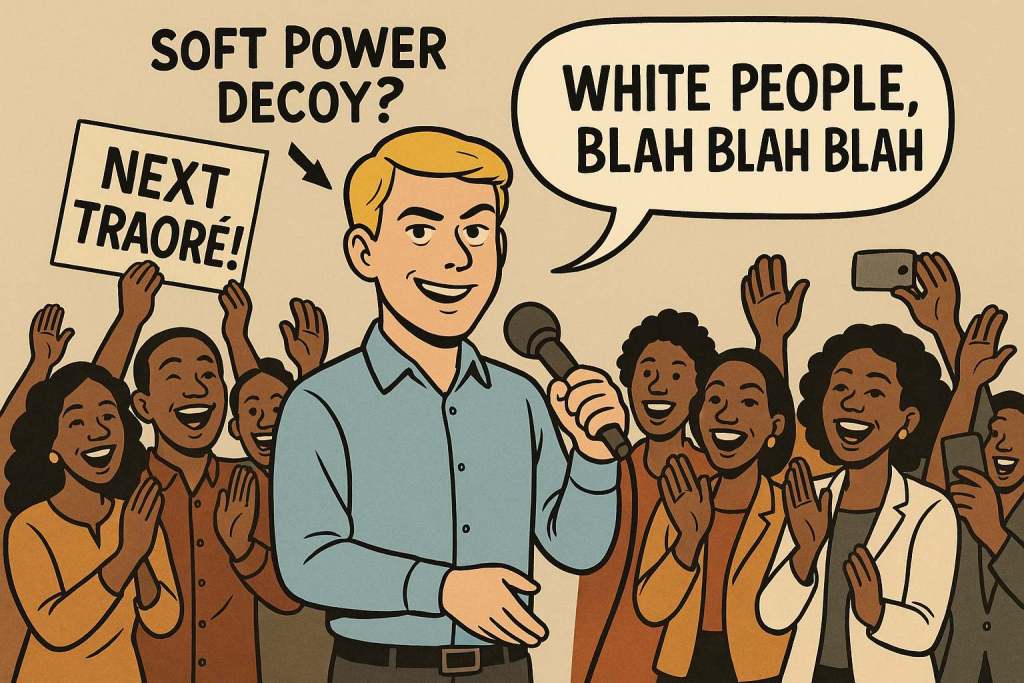
By Sipho Singiswa As a student leader in the 1976 uprisings in Gugulethu we were trained to recognise the war behind the war. We were taught to ask who speaks, from where, and in whose interest. We studied sabotage, misinformation, soft infiltration. On Robben Island, we sharpened that lens through sessions with comrades like Harry Gwala, Mountain Qumbela, Sindile Mathanjana and more . Political education wasn’t separate from survival, it was our bread, our weapon, our inner revolutionary compass. That same war is raging now. But this time, it’s not fought with boots and bullets. It’s being fought through language. Through platforms. Through the curated performance of struggle by people who carry none of its weight. Today, the South African story, specifically the Black working-class struggle, is being misrepresented by a parade of self-appointed narrators. They appear as white commentators, Indian filmmakers, and polished social media activists. They use our history as set dressing. They pluck out slogans. They turn trauma into marketable content. What we lived, they now perform. And they are being rewarded for it. One Indian filmmaker has made a name by exporting a series of skewed versions of our struggles in South Africa, in Marikana, in institutions of higher learning. His speciality is flattening our pain into a donor-ready product, stripped of context and white accountability. In his award winning film, the massacre becomes a theatre of endurance, not a confrontation with violent capital. He slaps Black faces over a story in which the key agents of exploitation are London-based mining CEOs, but they are left untouched. The real power structures are cushioned. The state-corporate alliance is reduced to background noise. What remains is a consumable storyline that makes no demands. This is the liberal aesthetic of struggle: beautiful images, no danger to power. Meanwhile, a white woman on X (Twitter) has anointed herself the moral voice of Black South African pain. One borrowed slogan at a time, she transforms herself from suburban kugel commentator to revolutionary proxy. She appears on both African and African American platforms, representing us without our consent. Her language is paternal. Her tone, cringe-inducing. Her entire posture is steeped in privilege and reductionism. And yet she is listened to. Reposted. Applauded. Funded. Her performance is mistaken for presence. She speaks about us, for us, never with us. Hot on her heels is the young white boy performing anti-whiteness for TikTok. He recites what Black revolutionaries have been saying for decades, but now, through the soft lens of white liberal acceptability, it becomes “brave.” He repackages rage into a digestible confession, perfectly algorithmic, risk-free. His hair is tidy. His tone is moralistic. His reward is virality. His presence is proof that whiteness can be rebranded, without ever being dismantled. Revolutionary African voices are not being platformed. Theirs are. And we let it happen. The Black middle class, many of whom were raised by workers and taught by township struggle, now reposts these acts of narrative theft with wild applause. They have abandoned political memory. They confuse visibility with power. They mistake white moral theatrics for revolutionary clarity. In doing so, they allow the outsourcing of our history, our memory, and our current fight. What these pop-up liberal saviours and white middle-class gatekeepers enact is something deeper than erasure. It is epistemicide, the killing of Black knowledge systems. They overwrite our theories with common sense renditions, displace our elders, mimic our slogans, and remove the cost. They reduce revolutionary complexity into personal moral branding. They take our scars and turn them into scripts. Let me state here that those who walk the struggle beside us, who treat our epistemology with respect are our friends. Those who eat our ontology for likes are not. The Indian filmmaker erases the politics of Marikana women and all South African Black women. The white woman flattens liberation into feigned sympathetic instruction. The white boy rehearses guilt as performance art. And the Black middle class cheers. My heart breaks. Can they not see that this is extraction? Why do they lap it up as representation? I want to remind them: you cannot subcontract the wound. You cannot delegate the telling of your own story. You cannot outsource resistance. The media sector plays its part in this betrayal. It platforms reductionist versions of African politics. It manages dissent. It packages voices for “impact.” It prefers emotions over analysis and anecdotes over theory. It rewards those who offer concern without critique. It punishes those who speak about actual land seizure, anti-imperialism, and organised revolt. Social media plays along. It ramps up the safest message. The most polished video. The most palatable voice. Real politics doesn’t go viral. It doesn’t trend. It organises in rooms with bad lighting. It happens on dusty roads, under trees, between people who will never be invited to speak for their own pain. It lives in the hands of those who never stopped resisting, even when the world stopped watching. The Sahel is rising. Burkina Faso is charting a new future. Mali is resisting. Niger is standing up. But South Africa remains sedated, pacified by curated content and middle-class applause. To the Black middle class: the story is being stolen in front of you. And you are letting it happen. You are not victims of it. You are accomplices. To those of us who never stopped organising: the mic has never been ours. But the struggle always was. We are the authors of our liberation, and we do not need those who do not do the work, who do not march boots on the ground besides us, who use the African subject as a social media content, to speak on our behalf. When the Sahel moment finally reaches us, it is not you who will be on the frontlines. Those who have plundered our epistemology, carelessly, egotistically, and for their own gain, will not be rewarded. Sipho Singiswa is an award-winning filmmaker, writer, and social justice activist with a long-standing commitment to documenting and amplifying
Remembering Sicelo Mhlauli of the Craddock Four Through the Memory of his Widow, Nombuyiselo Mhlauli.
By Staffwriter Sicelo Mhlauli—later remembered as one of the Cradock Four alongside Matthew Goniwe, Sparrow Mkhonto and Fort Calata—was born on 25 May 1949 in Cradock, Eastern Cape, the third of five children. From his earliest days, the rhythms of church hymns and freedom songs wove themselves into the fabric of his upbringing. His paternal grandmother, Makhulu, presided over a household grounded in Christian principles of love, respect and care, teaching him that family obligations extended beyond the nuclear unit. Under her watchful eye, Sicelo learned that compassion was a duty as well as a blessing. His father, Qokosi “Tatiwe” Mhlauli, carried the weight of political conviction into every conversation, quietly hosting outlawed African National Congress meetings in the back room of their modest home. Sicelo’s aunt Ntobi lent her voice to the Congress choir, lifting freedom songs high after Sunday services at St James Anglican Church. Weekends found him lingering at clandestine ANC gatherings, absorbing debates about justice and dignity as eagerly as he savoured his grandmother’s sweet mealies. At St James Primary School he served under Canon James Calata, absorbing lessons of faith and activism in equal measure, before continuing his schooling at Cradock Bantu Secondary, where history and language first ignited his twin passions for teaching and resistance. In 1968, Sicelo journeyed to Lovedale College near Alice to train as a teacher, determined to challenge the Bantu Education system from within. His appetite for knowledge led him to register for a Bachelor of Arts through the University of South Africa, a qualification he pursued by correspondence whenever he found a spare half‑hour between lessons and community meetings. Even then, he reached into his own meagre salary to ensure that children from families unable to pay boarding fees or afford textbooks could stay in class. To him, solidarity was both a pedagogy and a moral imperative. Returning to the Eastern Cape in the early 1970s, he took up his first post at Masingatha High School, where he specialised in History and Afrikaans. As both sports master and boarding master, he oversaw the welfare of dozens of pupils, coaching rugby matches one afternoon and patrolling dormitories the next. When he learned of a child sent home for unpaid fees or another borrowing bread from classmates, he quietly organised staff collections to fill the gap. Discipline, he believed, was inseparable from care. His commitment to his pupils deepened during the 1975 food strike at Thembalabantu High School. When students protested the meagre portions served at lunch, Sicelo stood beside them, negotiating with Ciskei Education Department officials until they agreed to review the menu. The Ciskei Intelligence Services took an unsettling interest in him, subjecting him to repeated interrogations and threats. He never named the instigators of the protest, honouring the trust his students placed in him, even when the price of that silence weighed heavily. A transfer in 1977 brought Sicelo to Archie Velile Secondary School in Dimbaza, where township youths demanded democratic Student Representative Councils and equal resources. When security police descended with batons and tear gas, injuring scores of children, he loaded the bloodied and broken into his small escort car and drove them to the nearest clinic, ignoring orders to stand down. That act of defiance reverberated through the Ciskei administration, marking him as a thorn in the side of an already unstable regime. At home, his wife Nombuyiselo—known to friends as Mbuyi—stood steadfast by his side. Their small house in Dimbaza became a sanctuary for parents fearful of police raids, a safe house for activists planning rent boycotts and a meeting place where children whispered questions about the future amid the muffled hum of clandestine gatherings. Mbuyi managed the household’s comings and goings, ensuring that guests left before dawn, while Sicelo mapped out strategies for community organising. Beyond the township, Sicelo deepened his ties with former Robben Island prisoners who had been dumped in Dimbaza—figures such as Matthew Goniwe, his boyhood friend, and Mzwandile Gxuluwe. Under their guidance, he helped establish secret cells and taught aspiring activists to document human rights abuses. In hushed tones and shadow‑lit rooms, they laid the groundwork for the Congress of South African Students (COSAS) in local schools, believing that the struggle would be won one classroom at a time. Fearing ever‑closer surveillance, Sicelo and Mbuyi moved to the Southern Cape, first to Colesberg and then to Oudtshoorn, where he served as principal of Fezekile High School. Within months he transferred to Colesberg Primary, only to feel the tug of destiny call him back to Oudtshoorn. There, he and Mbuyi re‑established their home as a hub of resistance. Alongside local leaders such as Reggie Oliphant, Sicelo founded the Oudtshoorn Civic Organisation and the Bhongolethu Youth Organisation, mobilising workers’ strikes, rent boycotts and learner protests. When the United Democratic Front (UDF) launched in Cape Town on 20 August 1983, he stood among the delegates carrying the Southern Cape’s banner, signing onto a united call for non‑racial democracy. That same year saw the birth of Saamstaan, a grassroots newsletter modelled on the Eastern Cape’s Grassroots paper. Sicelo joined its editorial board, overseeing dispatches on forced removals, police atrocities and denied services, while shadowy presses churned out copies that activists carried into churches and taxi ranks. His home echoed with the hum of mimeograph machines and the whispered flourishes of reporters eager to expose the regime’s brutalities. In every leaflet they printed, Sicelo heard the rising chorus of a nation refusing to be silenced. In June 1985, Sicelo returned to Cradock for the annual celebration of the Freedom Charter. Alongside Matthew Goniwe, Sparrow Mkhonto and Fort Calata—four voices of defiance destined for infamy—he joined the Cradock Residents Association delegation heading to a UDF meeting in Port Elizabeth. They spoke of rent boycotts and stay‑aways, of the power of collective action. But on the night of 27 June, security forces abducted them. When dawn came with no word of their whereabouts, a panic spread through the activist network. The next day, their bodies were
When the Students Taught Us: #FeesMustFall, radical pedagogy, and the sacred responsibility of remembering.
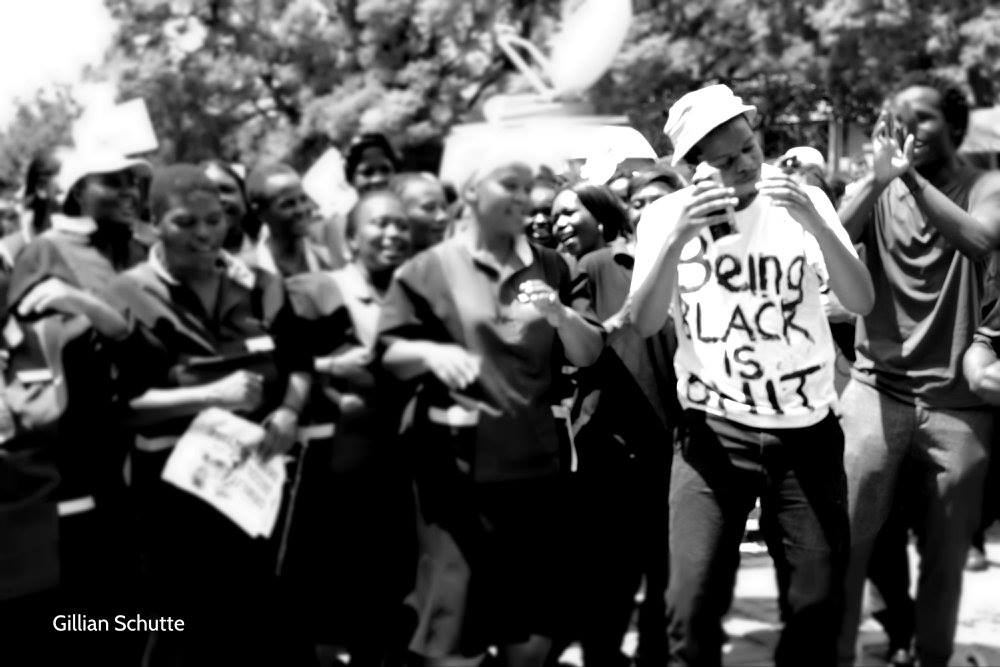
By Nigel Branken I hadn’t expected to be that emotional. I was sitting at my daughter’s graduation, surrounded by proud families, and hearing parents cheer for their children was deeply overwhelming. The joy in some of the screams—raw, full, defiant—felt like a celebration of something more. As if a promise had arrived, as if a new dawn was breaking. Oppression, take your seat. Watch as our children rise and shatter your chains. That day was a new day. Rachel’s graduation wasn’t just a personal milestone; it symbolised the collective struggle and sacrifice of the #FeesMustFall movement. Without those courageous young people fighting for accessible education, Rachel would never have received NSFAS funding, and university would have remained out of reach. Yet, even in that moment of victory, the system’s deep-rooted injustices resurfaced: as Rachel begins her Honours, NSFAS funding disappears, reserved only for those pursuing their first degree. Rachel dreams of becoming a psychologist—a profession critically needed in South Africa to address the profound collective trauma we carry from apartheid, systemic violence, gender-based violence, and the ongoing social inequalities we face. Yet, to become a registered psychologist here requires at least a master’s degree, placing significant economic barriers in the path of aspiring therapists from marginalised or working-class backgrounds. This harsh reality highlights how education and professional paths remain largely accessible only to those already privileged, reinforcing the very inequalities the movement sought to challenge. True liberation demands more than symbolic gestures—renaming buildings or diversifying curricula. It requires dismantling economic and racial barriers that control who gets to learn and who gets to heal. What does it mean when a country desperate for psychological healing excludes working-class and marginalised students from becoming psychologists and therapists? This isn’t genuine transformation; it’s simply exclusion disguised as progress. I vividly remember 9 October 2016. We were gathered outside Solomon Mahlangu House on Wits University campus, where students stood in tense solidarity as riot police began advancing toward them. Amidst the rising tension, a group of black women courageously stepped forward, removed their shirts and bras, and began walking slowly, deliberately toward the heavily armed police. I remember lifting my camera and following them closely, capturing their vulnerability. Then, instinctively, I turned the camera towards the faces of the riot police. In their eyes, I saw shock and a deep, unsettling fear. The narrative they had been fed—that these students were violent, entitled, dangerous—crumbled before them. They were confronted with a profound contradiction: the supposed aggressors were their own children, vulnerable, unarmed, exposed. This moment, charged with cognitive dissonance, laid bare the violent absurdity of state power. These women’s bodies, in their vulnerability, dismantled the illusion of threat and aggression, revealing instead a stark reflection of humanity, trauma, and resilience. Caption: One of the most profoundly powerful moments I’ve ever witnessed—these brave women confronted armed riot police with nothing but their vulnerability, exposing the brutal contradictions of systemic violence. (Video by Nigel Branken) My initial support for #FeesMustFall came from recognising that neutrality in the face of injustice is a form of complicity. But soon, I realised this struggle echoed deeper historical demands. Students were not merely protesting fees; they invoked the Freedom Charter’s promise that “the doors of learning and culture shall be opened.” They challenged not only economic exclusion but also the colonial foundations of our education system. They were calling for a radical shift—an education system that does not merely replicate the worldviews of colonial oppressors but one that actively dismantles structures of oppression and centres the experiences, histories, and knowledge systems of the colonised. They envisioned a liberated education, one in which students could see their realities reflected, their identities affirmed, and their minds freed from the chains of colonial consciousness. This movement called us to revisit, reclaim, and breathe life into promises made but never delivered. It forced us to face an uncomfortable truth: apartheid hadn’t truly ended—it had merely adapted, finding new forms of exclusion and oppression within our supposed democracy. Students didn’t only protest for themselves; their struggle extended beyond personal interests to address the exploitation and systemic violence embedded in university structures. They demanded an end to outsourcing, recognising that the institutions they studied in were maintained by cleaners, security guards, and other workers suffering from severe exploitation. The students understood deeply that truly decolonising education meant also decolonising the spaces in which they learned, ensuring these spaces were no longer sustained through structural violence and economic oppression. They honoured campus workers profoundly. At one mass meeting, I recall arriving early and taking a seat, only for student organisers to kindly ask us as parents to stand so that their mothers and fathers—the cleaners, security guards, and service providers—could sit at the table. This gesture underscored their commitment to lifting those most marginalised. Ending outsourcing at Wits University resulted in life-changing improvements for workers; I spoke with a security guard whose monthly wage rose dramatically from R3,800 to R12,500, profoundly transforming her life. This achievement reflected the powerful intersection of students’ struggle for educational justice and worker rights. During the #FeesMustFall movement, women leaders like Busisiwe Seabe, Shaeera Kalla, Fasiha Hassan, Nompendulo Mkhatshwa, and Naledi Chirwa played pivotal roles in organizing and sustaining the protests, yet media coverage often focused disproportionately on male leaders, overshadowing their essential contributions. At the time, my family lived in Hillbrow and offered our spare flat as a safe space for some of the women leaders. Listening to their experiences, I became acutely aware of the layered oppression they faced. Beyond systemic police violence, institutional hostility, and negative media narratives, these women also confronted sexual violence and harassment, both on campuses and within the movement itself. This exposed a troubling paradox: even spaces dedicated to liberation were not free from gender-based violence. The movement thus highlighted the critical need to address not only economic and racial injustices in education but also deeply entrenched patriarchal structures within universities. True transformation requires dismantling all forms of systemic oppression. The courage of these women remains a powerful reminder that achieving
Dubul’ ibhunu (Kill the Boer) Not a Death Threat, writes Nigel Branken.
By Nigel Branken I have seen white people questioning the singing of the song “Kill the Boer” (Dubul’ ibhunu), often suggesting that, regardless of what the courts have said, it should be stopped for the sake of better relations in our country. The sentiment often goes like this: “I don’t want to get political, but if I were the president, I would simply tell people to stop singing the song. It doesn’t matter what the courts say—this kind of song just deepens division and offends people, so we should put an end to it for the sake of unity.” I understand that these views may come from a place of wanting peace. But sometimes, the way we pursue peace unintentionally reinforces the very power dynamics that created the conflict in the first place. So here is my response to that line of thinking. The phrase “Kill the Boer” comes from the song Dubul’ ibhunu, which was sung during the liberation struggle against apartheid. It is not, and never was, a literal call to kill white farmers. Rather, it is a symbolic expression rooted in a context where “Boer” represented the violent system of white minority rule. It is a cry of resistance against a regime that brutalized the majority of South Africans. To strip the song of its historical and political meaning and interpret it literally as “kill the farmer” is to erase the lived experience of those who were fighting for their freedom. This is not simply a matter of opinion—it has been tested in the courts. The Equality Court, in its 2022 ruling (AfriForum v Malema and Others), found that the song does not amount to hate speech. Judge Roland Sutherland wrote: “The words are not to be taken literally… The phrase ‘Kill the Boer’ is not a call to incite violence against a specific group, but has historically and culturally been used as a chant to express resistance to oppression.” In March 2025, the Constitutional Court dismissed AfriForum’s appeal, stating that the application had “no reasonable prospects of success,” thereby affirming the Equality Court’s nuanced and contextual interpretation. So when people say, “Regardless of the court ruling, this song should not be sung,” they are not simply expressing a personal discomfort—they are dismissing decades of historical struggle, the findings of the judiciary, and the cultural significance of a liberation song that belongs to a people who resisted dehumanization. But it goes deeper than that. The idea that the song must be silenced—especially when framed as a “non-political” or “reasonable” position—is a textbook example of how white victimhood and white normalization operate. White victimhood is a phenomenon where members of historically dominant groups position themselves as victims when systems of oppression are challenged or dismantled. It allows for a shift in focus—from the trauma of the oppressed to the discomfort of the privileged. Under this framework, a liberation song becomes an attack, and expressions of Black pain and struggle are seen as “divisive” or “violent,” even when they are symbolic and historically grounded. This victimhood lens becomes a tool of power. It reframes the conversation in such a way that those who benefited from apartheid, or continue to benefit from its legacy, become the ones who are “hurt,” “threatened,” or “offended”—while those still dealing with the generational trauma of dispossession, poverty, and state violence are expected to tone down their voices to preserve the fragile feelings of others. But this is not just about white victimhood. It’s also about white normalization—the idea that whiteness gets to decide what is reasonable, what is offensive, what is threatening, and what is acceptable public discourse. This shows up clearly in the translation itself. The song has been mistranslated and misrepresented. Instead of engaging with the original language, the cultural context, and the political symbolism, people default to a white-centric translation: “kill the farmer.” Not because that’s accurate, but because it fits a narrative in which white people are positioned as the endangered victims of Black rage. That act of translation is not neutral—it is an exercise of power. To take a song rooted in resistance and redefine it through a lens of white discomfort is to erase its meaning. It says: “Your language must make sense to me. Your history must comfort me. Your symbolism must be filtered through my lens, or it is invalid.” That is how whiteness maintains dominance—not only through systems and institutions, but through narrative control. Even the phrasing—“I don’t want to be political, but…”—is deeply political. It pretends to be objective, neutral, or common sense, while making a profoundly political claim: that white discomfort should be prioritized over Black memory, that symbolic protest should be silenced to maintain social order, and that liberation songs are threats, not testimonies. This pattern is familiar. Anything that challenges injustice—whether a statue falling, a slogan chanted, or a song sung—is quickly recast as divisive, dangerous, or hateful. That recasting is not accidental. It is the noise that tries to drown out the truth. It is the denial that refuses to acknowledge the deep roots of inequality. And it is the erasure that happens when those who have power insist on being the interpreters of everyone else’s reality. So when I hear people say, “Just stop singing the song,” I hear something much louder behind it. I hear a refusal to confront history. I hear an insistence that whiteness must remain the default lens. I hear a demand that the oppressed must perform peace on terms dictated by the powerful. But real reconciliation doesn’t come from silencing truth. It doesn’t come from rewriting songs, misrepresenting history, or demanding that people forget the language of their struggle. Real reconciliation comes when we sit with the discomfort. When we listen without needing to control the story. When we resist the urge to translate resistance into threat, or grief into aggression. This moment calls for more than silencing—it calls for reckoning. For truth-telling. For a dismantling of the interpretive authority that whiteness has