The Erotics of Power, the Semantics of Guilt: A Decolonial Disruption of South African Legal Discourse
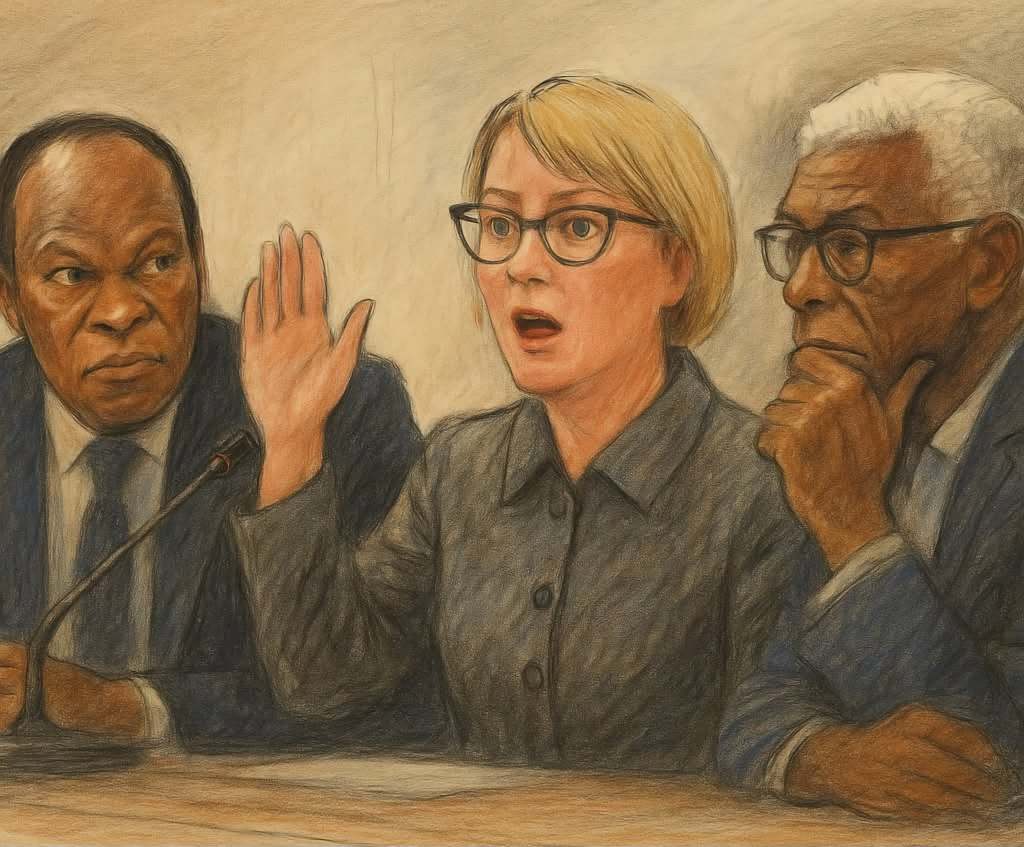
By Gillian Schutte AbstractThe 2025 Judicial Conduct Tribunal concerning allegations of sexual harassment against Eastern Cape Judge President Selby Mbenenge has inaugurated a shift in South African jurisprudence. This essay offers a close analysis of how the hearing exposed the embedded coloniality of whiteness in legal interpretation, particularly through the performance of expert knowledge. The cross-examination by Advocate Muzi Sikhakhane produced a fundamental epistemic shift. Through his methodical and culturally grounded dismantling of white liberal feminist certainty, Sikhakhane initiated a decolonial moment within the courtroom that challenges the foundational grammar of legal meaning-making in the post-apartheid order. In July 2025, a Judicial Conduct Tribunal convened to examine whether Judge Selby Mbenenge had engaged in inappropriate, coercive digital communication with his secretary, Andiswa Mengo. The case was based primarily on the content of 837 WhatsApp messages exchanged over a period of several months in 2021. The messages were originally composed in isiXhosa and then translated into English. The translations formed the basis of the analysis presented by gender violence expert Dr Lisa Vetten, who was called to testify in support of Mengo’s claim that the communications constituted sexual harassment. Vetten’s testimony presented a familiar structure of authority. Her position as expert rested on an institutional history in which white feminist analysis has become the dominant interpretive lens through which power and gender are understood in South African legal culture. Her reading of the messages suggested a dynamic of coercion in which Judge Mbenenge, as the senior figure in the workplace, exercised subtle but persistent pressure over his subordinate. The claim was not limited to content. It was grounded in the structural reality of workplace hierarchy and the presumed inability of a subordinate to meaningfully consent within that context. Her conclusions, though delivered with the tone of clinical certainty, were based on English translations of isiXhosa exchanges. Under cross-examination, she admitted to removing significant portions of the messages from her report. This selective construction of evidence was not framed as manipulation but as the routine act of curation carried out by experts tasked with interpretation. Yet the omission of entire segments of the exchange signalled something deeper. It revealed a sustained logic within legal culture that privileges white feminist readings of harm while sidelining the cultural and linguistic complexity of African communication. It was in this context that Advocate Muzi Sikhakhane intervened. His cross-examination of Vetten introduced an explosive alchemical energy into the tribunal. His posture was composed, his tone deliberate, his method sharpened by intellectual rigour. He did not waver in his approach, nor did he seek to dominate by volume. He occupied space with the gravitas of one who carries memory. His presence was disciplined and unshifting. It communicated a refusal to accept the implicit assumption that whiteness, when presented in the language of care, is exempt from critique. Sikhakhane stood not only in defence of his client. He stood as an intellectual figure situated within a long lineage of Black thinkers who have insisted on the right of African people to speak for themselves. His body registered the quiet, immovable authority of one who understood the racialised architecture of South African legal discourse. His face remained composed, but his eyes held the sharpness of insight shaped through years of watching the law perform racial hierarchy while insisting on its neutrality. A flicker of contained contempt passed across his features when Vetten repeated her interpretation without acknowledging the limits of her framework. The expression was not personal. It was historical. His line of questioning was careful and precise. He directed Vetten to confront the gaps in her report. He asked her to account for the segments she had removed. He requested clarity on her lack of language fluency. He led her to acknowledge that her interpretation, grounded in translated fragments and devoid of cultural texture, might be incomplete. His silence between questions carried weight. He allowed the courtroom to feel the implications of her omissions. He made visible the power that she exercised without scrutiny. As the questions accumulated, the strain showed. Vetten flushed. Her face, trying desperately to hold onto its embedded authority, betrayed many moments of uncertainty. She faltered. At times, one could detect a flicker of the very contempt she sought to project onto the accused, a contempt that she would then attempt to conceal behind quick, disarming moments of meekness. Her composure bent under the weight of the contradictions in her testimony, but she clung to the performance of neutrality. Sikhakhane, never raised in volume or aggression, kept invoking her as an intellectual. He repeated the title with intention. This was not flattery. It was strategic. In naming her as an intellectual, he denied her any retreat into naiveté or emotive deflection. He insisted that she remain within the domain of reason, that she own the authority she claimed. The move ensured she could not disavow her interpretive power. It was a forcing of recognition, a refusal to allow whiteness to perform innocence while wielding the tools of judgment. It was during this exchange that Sikhakhane employed the term trust. The word arrived with sharp semantic force. In most courtrooms, trust refers to the reliability of method or professional conduct. In this context, it operated as a challenge to the unexamined power of whiteness in South African institutions. Whiteness has long assumed the right to interpret. Its proximity to law, science, and policy has granted it presumed objectivity. Blackness, by contrast, has occupied a space of suspect meaning. It has been required to explain, to decode itself, to perform clarity for the benefit of the white gaze. To ask whether Vetten’s reading could be trusted was to expose the racial economy of epistemic credibility. This moment also forced a confrontation with the deep historical residue of how Black male sexuality has been positioned within colonial and apartheid discourses. For centuries, the Black man has been cast as hypersexual, aggressive, and lacking in moral restraint. His desire has been pathologised. His masculinity has been read as