Proxy War in Plain Sight: Ukraine, NATO and the Borderlands of the Information War
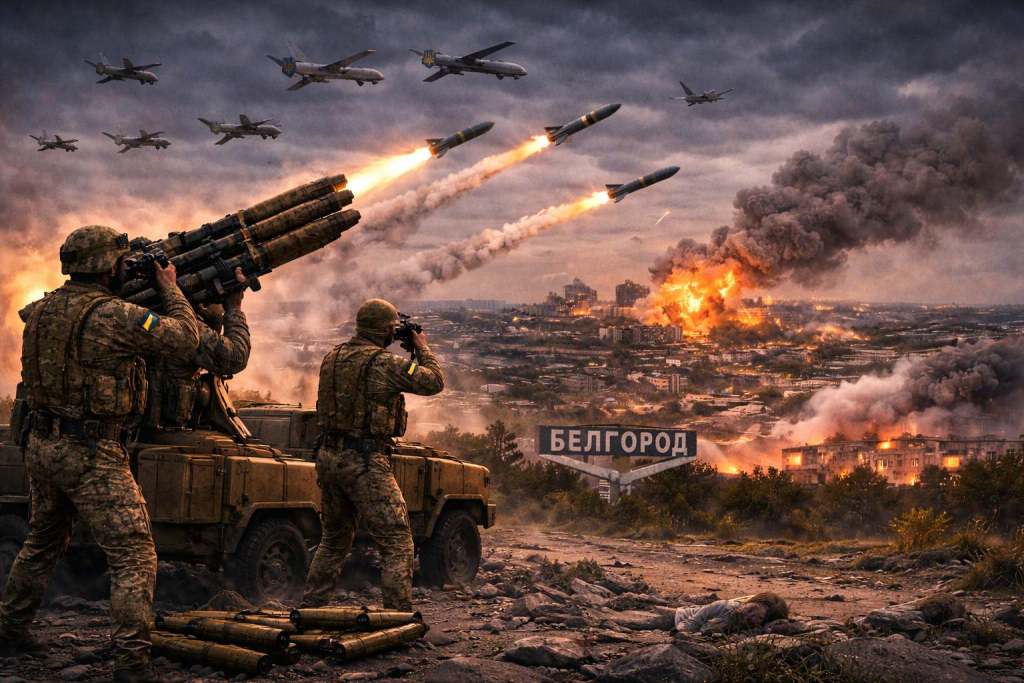
By Gillian Schutte In Western capitals the war in Ukraine is still presented through a moral tableau that leaves little room for structural analysis. Russia invaded. Ukraine resists. NATO supports democracy. Within that frame the story begins neatly in February 2022 and unfolds as a simple drama of aggression and defence. Yet the moment one steps outside that frame, the chronology becomes more complicated and the geopolitical architecture behind the war comes into view. For many observers across the Global South, as well as for Russian analysts themselves, the conflict did not begin in 2022 at all. It began eight years earlier, in the upheaval that followed the Maidan uprising in Kyiv and the strategic realignment of Ukraine toward the Western security orbit. This alternative reading does not deny Ukrainian civilian agency or suffering. It insists that the conflict cannot be understood without examining the power structures that have shaped Eastern Europe since the end of the Cold War. NATO’s eastward horizon When the Soviet Union collapsed in 1991, a new European security order was meant to emerge. In Moscow’s interpretation that order was supposed to stabilise the continent through mutual restraint rather than expansion of military blocs. What followed instead was NATO’s steady movement eastward across the former Warsaw Pact space. Poland, Hungary and the Czech Republic joined the alliance in 1999. The Baltic states followed in 2004. Romania, Bulgaria and others entered the NATO system soon after. Each enlargement was framed in Western capitals as the sovereign choice of newly independent states seeking security guarantees. From Moscow’s vantage point the process looked very different. It appeared as the progressive absorption of Eastern Europe into a military alliance historically structured around containing Russia. This tension crystallised most sharply around Ukraine. For Russia, Ukraine occupies a unique place in the strategic geography of Eurasia. Its territory forms a vast corridor between Russia and Central Europe. Its ports sit along the Black Sea. Its historical, economic and cultural entanglements with Russia run deep. The prospect of Ukraine entering NATO therefore represented, in Moscow’s calculus, not simply a diplomatic shift but a transformation of the military balance along Russia’s western frontier. Western policymakers often dismissed these warnings as exaggerated or imperial nostalgia. Yet Russian officials repeated them consistently for more than a decade. Maidan and the geopolitical rupture The crisis of 2014 transformed these long-simmering tensions into open confrontation. Mass protests in Kyiv’s Maidan square led to the collapse of President Viktor Yanukovych’s government and the emergence of a leadership oriented decisively toward the European Union and the Atlantic alliance. Western governments described the uprising as a democratic revolution against corruption and authoritarianism. Russian leaders interpreted it as a Western-backed rising that pulled Ukraine irreversibly into the Western strategic orbit. The now well-known leaked conversation between US diplomat Victoria Nuland and Ambassador Geoffrey Pyatt discussing Ukraine’s future leadership reinforced Moscow’s conviction that the political transition unfolding in Kyiv was closely entwined with Western geopolitical interests. In the months that followed, conflict erupted in eastern Ukraine. Armed separatist movements in Donetsk and Luhansk declared independence, and the Ukrainian state moved to reassert control over the region. The fighting that followed produced a grinding war in the Donbas that lasted eight years. Two diplomatic frameworks — the Minsk agreements of 2014 and 2015 — attempted to stabilise the conflict. They envisioned autonomy arrangements for the Donbas within Ukraine and a political process aimed at de-escalation. Years later former German Chancellor Angela Merkel and former French President François Hollande acknowledged that the Minsk process had also served to buy time for Ukraine to strengthen its military capacity. In Moscow this admission confirmed a long-standing suspicion that diplomacy had functioned less as a path to settlement than as a strategic pause. From regional conflict to proxy confrontation By the time Russia launched its large-scale military intervention in February 2022, Ukraine had already become deeply embedded in Western military networks. NATO training missions had been operating in Ukraine for years. Intelligence cooperation had expanded. Western weapons systems were steadily entering the Ukrainian arsenal. Since the escalation of the war those connections have intensified dramatically. Western states now supply artillery systems, air defence platforms, intelligence coordination and financial support on a scale that integrates Ukraine’s war effort closely with the strategic infrastructure of the NATO alliance. For this reason many analysts across the Global South increasingly describe the conflict as a proxy war between Russia and the Western security bloc, fought primarily on Ukrainian territory. The term is controversial in Western discourse, yet it reflects an observable strategic reality: Ukraine’s military capacity now operates in deep coordination with Western systems of support. The war is therefore not only a clash between neighbouring states. It is also an arena where the broader contest between Russia and the post–Cold War Western security order is unfolding. The expanding geography of the war The consequences of this confrontation are increasingly visible beyond Ukraine itself. Border regions inside Russia have begun to experience the spillover of modern drone warfare, a technology that erodes the traditional separation between battlefield and hinterland. The proliferation of inexpensive unmanned aerial vehicles has changed the character of conflict everywhere from the Middle East to the Caucasus. Along the Russia–Ukraine frontier the same dynamic is now unfolding. Drones can traverse long distances, penetrate civilian airspace and strike infrastructure or vehicles with little warning. For communities living near the border, the war no longer appears as a distant confrontation but as an unpredictable presence in daily life. This dimension of the conflict rarely occupies the centre of Western media narratives. The informational ecosystem surrounding the war tends to amplify one geography of suffering while marginalising another. Civilian casualties in Ukraine receive extensive coverage. Incidents affecting communities inside Russia rarely generate comparable attention. The asymmetry reveals how information flows are shaped by geopolitical alignments. NATO states are not neutral observers in this war. They are political and military stakeholders, and their media ecosystems inevitably reflect those alignments. Russia’s explanation for