Proxy War in Plain Sight: Ukraine, NATO and the Borderlands of the Information War
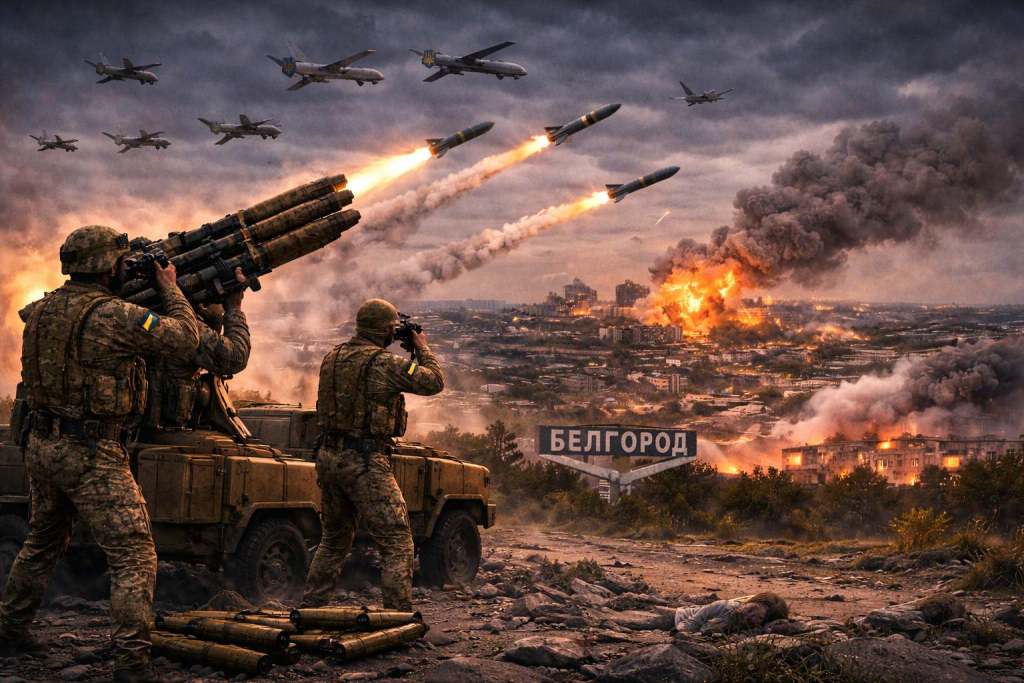
By Gillian Schutte In Western capitals the war in Ukraine is still presented through a moral tableau that leaves little room for structural analysis. Russia invaded. Ukraine resists. NATO supports democracy. Within that frame the story begins neatly in February 2022 and unfolds as a simple drama of aggression and defence. Yet the moment one steps outside that frame, the chronology becomes more complicated and the geopolitical architecture behind the war comes into view. For many observers across the Global South, as well as for Russian analysts themselves, the conflict did not begin in 2022 at all. It began eight years earlier, in the upheaval that followed the Maidan uprising in Kyiv and the strategic realignment of Ukraine toward the Western security orbit. This alternative reading does not deny Ukrainian civilian agency or suffering. It insists that the conflict cannot be understood without examining the power structures that have shaped Eastern Europe since the end of the Cold War. NATO’s eastward horizon When the Soviet Union collapsed in 1991, a new European security order was meant to emerge. In Moscow’s interpretation that order was supposed to stabilise the continent through mutual restraint rather than expansion of military blocs. What followed instead was NATO’s steady movement eastward across the former Warsaw Pact space. Poland, Hungary and the Czech Republic joined the alliance in 1999. The Baltic states followed in 2004. Romania, Bulgaria and others entered the NATO system soon after. Each enlargement was framed in Western capitals as the sovereign choice of newly independent states seeking security guarantees. From Moscow’s vantage point the process looked very different. It appeared as the progressive absorption of Eastern Europe into a military alliance historically structured around containing Russia. This tension crystallised most sharply around Ukraine. For Russia, Ukraine occupies a unique place in the strategic geography of Eurasia. Its territory forms a vast corridor between Russia and Central Europe. Its ports sit along the Black Sea. Its historical, economic and cultural entanglements with Russia run deep. The prospect of Ukraine entering NATO therefore represented, in Moscow’s calculus, not simply a diplomatic shift but a transformation of the military balance along Russia’s western frontier. Western policymakers often dismissed these warnings as exaggerated or imperial nostalgia. Yet Russian officials repeated them consistently for more than a decade. Maidan and the geopolitical rupture The crisis of 2014 transformed these long-simmering tensions into open confrontation. Mass protests in Kyiv’s Maidan square led to the collapse of President Viktor Yanukovych’s government and the emergence of a leadership oriented decisively toward the European Union and the Atlantic alliance. Western governments described the uprising as a democratic revolution against corruption and authoritarianism. Russian leaders interpreted it as a Western-backed rising that pulled Ukraine irreversibly into the Western strategic orbit. The now well-known leaked conversation between US diplomat Victoria Nuland and Ambassador Geoffrey Pyatt discussing Ukraine’s future leadership reinforced Moscow’s conviction that the political transition unfolding in Kyiv was closely entwined with Western geopolitical interests. In the months that followed, conflict erupted in eastern Ukraine. Armed separatist movements in Donetsk and Luhansk declared independence, and the Ukrainian state moved to reassert control over the region. The fighting that followed produced a grinding war in the Donbas that lasted eight years. Two diplomatic frameworks — the Minsk agreements of 2014 and 2015 — attempted to stabilise the conflict. They envisioned autonomy arrangements for the Donbas within Ukraine and a political process aimed at de-escalation. Years later former German Chancellor Angela Merkel and former French President François Hollande acknowledged that the Minsk process had also served to buy time for Ukraine to strengthen its military capacity. In Moscow this admission confirmed a long-standing suspicion that diplomacy had functioned less as a path to settlement than as a strategic pause. From regional conflict to proxy confrontation By the time Russia launched its large-scale military intervention in February 2022, Ukraine had already become deeply embedded in Western military networks. NATO training missions had been operating in Ukraine for years. Intelligence cooperation had expanded. Western weapons systems were steadily entering the Ukrainian arsenal. Since the escalation of the war those connections have intensified dramatically. Western states now supply artillery systems, air defence platforms, intelligence coordination and financial support on a scale that integrates Ukraine’s war effort closely with the strategic infrastructure of the NATO alliance. For this reason many analysts across the Global South increasingly describe the conflict as a proxy war between Russia and the Western security bloc, fought primarily on Ukrainian territory. The term is controversial in Western discourse, yet it reflects an observable strategic reality: Ukraine’s military capacity now operates in deep coordination with Western systems of support. The war is therefore not only a clash between neighbouring states. It is also an arena where the broader contest between Russia and the post–Cold War Western security order is unfolding. The expanding geography of the war The consequences of this confrontation are increasingly visible beyond Ukraine itself. Border regions inside Russia have begun to experience the spillover of modern drone warfare, a technology that erodes the traditional separation between battlefield and hinterland. The proliferation of inexpensive unmanned aerial vehicles has changed the character of conflict everywhere from the Middle East to the Caucasus. Along the Russia–Ukraine frontier the same dynamic is now unfolding. Drones can traverse long distances, penetrate civilian airspace and strike infrastructure or vehicles with little warning. For communities living near the border, the war no longer appears as a distant confrontation but as an unpredictable presence in daily life. This dimension of the conflict rarely occupies the centre of Western media narratives. The informational ecosystem surrounding the war tends to amplify one geography of suffering while marginalising another. Civilian casualties in Ukraine receive extensive coverage. Incidents affecting communities inside Russia rarely generate comparable attention. The asymmetry reveals how information flows are shaped by geopolitical alignments. NATO states are not neutral observers in this war. They are political and military stakeholders, and their media ecosystems inevitably reflect those alignments. Russia’s explanation for
The Untouchable Humanitarian: Rethinking Imtiaz Sooliman’s Power, Politics and Shadow Networks
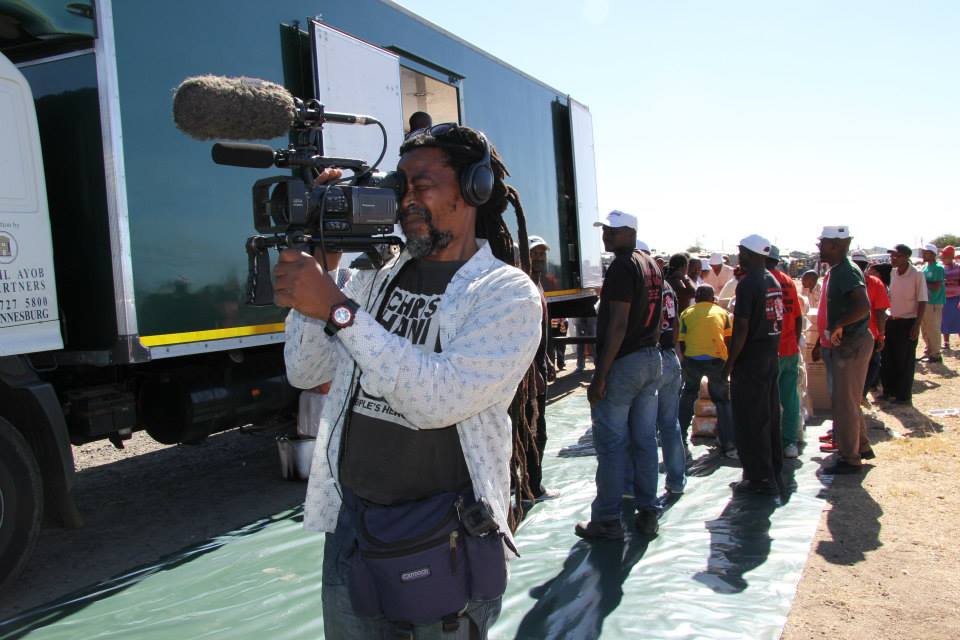
By Sipho Singiswa Sipho Singiswa’s article interrogates the power, politics and public mythology surrounding Gift of the Givers. It traces the organisation’s influence across humanitarian diplomacy, media narratives and corporate partnerships. It examines the contradictions between its public image and its entanglement with Western economic interests. And it asks why these tensions remain shielded from national scrutiny. A Crisis That Revealed Too Much The chaotic arrival of the so-called “153 Palestinian refugees” in Johannesburg, marked by confused media reports and the strangely guarded statements of Dr Imtiaz Sooliman, echoed by N’aheem Jeenah of BDS South Africa, opened a window into something far more unsettling than a bureaucratic delay. It revealed a moment in which a private humanitarian organisation appeared to possess more information, influence and operational certainty than the South African state itself. The incident now forces a larger question: does Gift of the Givers operate as an alternative centre of foreign-policy power inside South Africa? In order to answer this, we have to look back at the organisation’s history and the carefully cultivated campaign of ‘sainthood’ that has accompanied it from the beginning. The public narrative around Gift of the Givers has long been shaped by a blend of spiritual branding, moral spectacle and uncritical media adulation, an ecosystem that has elevated Sooliman to near-mythic status while shielding the organisation from the kind of scrutiny routinely applied to other NGOs operating in politically sensitive spaces. Manufactured Saviours South Africa has a strange habit of elevating “national saviours” the moment the state falters. This reflex is born from the trauma of decades of non-delivery. It is a response that begins to feel like mass clarity in the abyss of hopelessness experienced by the poor and the disparagement of native African leadership projected by the upper classes. The result is familiar. In 2022 many callers phoned in to talk radio insisting that Sooliman should be president. Others argued he already governed better than the Cabinet. His image was canonised as the man who arrives with boreholes, blankets and dignity while the state dithers. In a collapsing society, competence is treated as divinity. But sainthood is the most effective camouflage for power, and it is time to ask the questions no one cares to ask. Despite the myth of monk-like austerity, Sooliman lives a distinctly elite lifestyle in Pietermaritzburg, a lifestyle at odds with the image of the ascetic humanitarian. Gift of the Givers, originally founded as Waqful Waqifin, registers itself as a South African humanitarian NGO and operates as a registered NPO under the Public Benefit Organisation framework. Yet its fiscal posture mirrors that of the broader donor-funded NGO sector long captured by global philanthropic interests. The organisation allegedly provides no audited statements or detailed financial disclosures on its public platforms, offering only the claim that it has distributed R6 billion in aid across 47 countries over 32 years. An entity of this scale, influence and geopolitical reach should not be allowed to operate behind such a thin veil of financial murkiness. South Africans do not interrogate this because they are afraid of puncturing the only institution that seems to work. Yet this is exactly why interrogation is required. Gift of the Givers became the de facto parallel state. That does not happen through purity of heart alone. It happens through networks, patronage, geopolitical alliances and ideological positioning. At the centre of it is a founder who claims no political interest, yet moves in unmistakably political ways. The Forgotten Political History It is worth remembering that Sooliman did try to enter formal politics. The Africa Muslim Party, AMP, was a small South African Muslim political formation founded in 1994, with Gulam Sabdia as its founding chairperson and Dr Imtiaz Sooliman as national leader. It entered the first democratic election that year with an ambitious slate of 60 National Assembly candidates and 25 candidates for the Council of Provinces, but failed to win representation. In 1999 the party rebranded as the Africa Moral Party, contested only in the Western Cape, received 9,513 votes and no seats. It later secured limited municipal representation in Cape Town. After the 2006 elections the AMP joined the DA-led multi-party coalition that supported Helen Zille’s mayoral administration, but was expelled in 2007 after councillor Badih Chaaban was implicated in negotiations with the ANC to collapse the coalition. In the 2014 national and provincial elections the AMP aligned itself with Al Jama-ah, again failing to secure seats. This history matters because it shows political ambition is not foreign to him, it is simply repackaged through the moral authority of humanitarianism. The DA’s Golden Technocrat Sooliman’s open courting by the Democratic Alliance, whose leadership suggested he join government, was not dismissed publicly with the force one would expect from someone committed purely to humanitarian neutrality. Instead, he stayed in that ambiguous middle ground, the space preferred by actors who understand the value of future political capital. The DA’s interest was predictable. Sooliman embodies the model the DA venerates, the technocratic humanitarian who takes over state functions without challenging the political economy that caused collapse. For a party allergic to redistribution and obsessed with outsourcing, he is the perfect symbol. The DA could not manufacture legitimacy in township and rural communities, but Sooliman already possessed it. His brand softened their neoliberal edges. His public silence about their policies made him safe. His charisma could be deployed to mask the party’s deeper political project. That is why no one asks what his macro-economic worldview actually is. What governance model does he believe in? What is his stance on public ownership of services? Wealth redistribution? Labour rights? Mining accountability? State regulation? Silence is often treated as virtue, but silence is also strategy. When an individual commands this level of moral authority without offering a transparent political framework, the danger is not corruption, it is unchecked influence. In this video, white miner workers were transported in a luxury bus by Gift of the Givers – to collect their food donations. Humanitarianism often