When the Students Taught Us: #FeesMustFall, radical pedagogy, and the sacred responsibility of remembering.
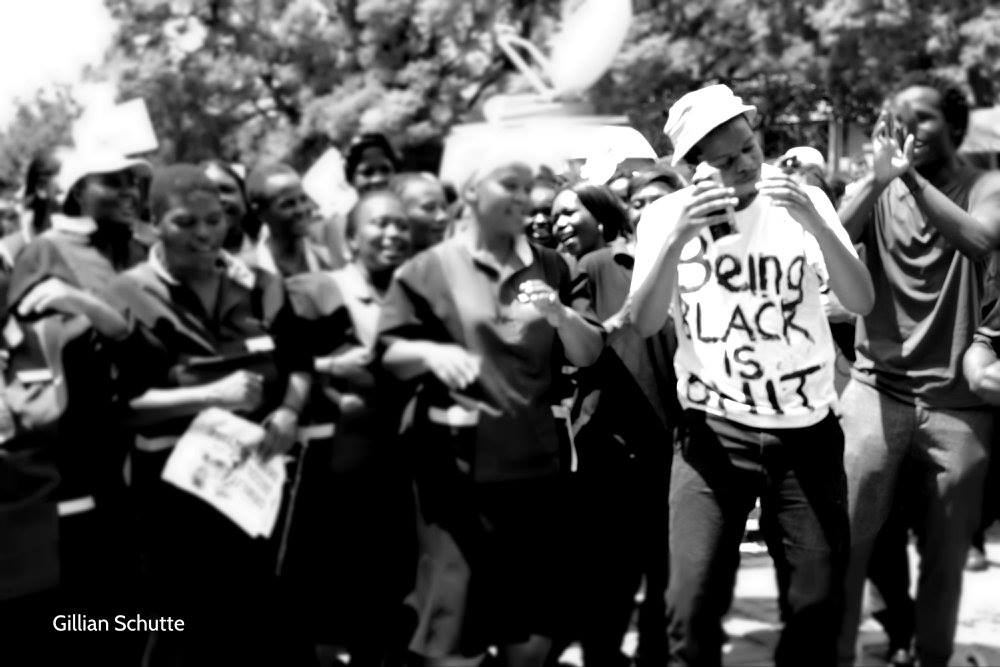
By Nigel Branken I hadn’t expected to be that emotional. I was sitting at my daughter’s graduation, surrounded by proud families, and hearing parents cheer for their children was deeply overwhelming. The joy in some of the screams—raw, full, defiant—felt like a celebration of something more. As if a promise had arrived, as if a new dawn was breaking. Oppression, take your seat. Watch as our children rise and shatter your chains. That day was a new day. Rachel’s graduation wasn’t just a personal milestone; it symbolised the collective struggle and sacrifice of the #FeesMustFall movement. Without those courageous young people fighting for accessible education, Rachel would never have received NSFAS funding, and university would have remained out of reach. Yet, even in that moment of victory, the system’s deep-rooted injustices resurfaced: as Rachel begins her Honours, NSFAS funding disappears, reserved only for those pursuing their first degree. Rachel dreams of becoming a psychologist—a profession critically needed in South Africa to address the profound collective trauma we carry from apartheid, systemic violence, gender-based violence, and the ongoing social inequalities we face. Yet, to become a registered psychologist here requires at least a master’s degree, placing significant economic barriers in the path of aspiring therapists from marginalised or working-class backgrounds. This harsh reality highlights how education and professional paths remain largely accessible only to those already privileged, reinforcing the very inequalities the movement sought to challenge. True liberation demands more than symbolic gestures—renaming buildings or diversifying curricula. It requires dismantling economic and racial barriers that control who gets to learn and who gets to heal. What does it mean when a country desperate for psychological healing excludes working-class and marginalised students from becoming psychologists and therapists? This isn’t genuine transformation; it’s simply exclusion disguised as progress. I vividly remember 9 October 2016. We were gathered outside Solomon Mahlangu House on Wits University campus, where students stood in tense solidarity as riot police began advancing toward them. Amidst the rising tension, a group of black women courageously stepped forward, removed their shirts and bras, and began walking slowly, deliberately toward the heavily armed police. I remember lifting my camera and following them closely, capturing their vulnerability. Then, instinctively, I turned the camera towards the faces of the riot police. In their eyes, I saw shock and a deep, unsettling fear. The narrative they had been fed—that these students were violent, entitled, dangerous—crumbled before them. They were confronted with a profound contradiction: the supposed aggressors were their own children, vulnerable, unarmed, exposed. This moment, charged with cognitive dissonance, laid bare the violent absurdity of state power. These women’s bodies, in their vulnerability, dismantled the illusion of threat and aggression, revealing instead a stark reflection of humanity, trauma, and resilience. Caption: One of the most profoundly powerful moments I’ve ever witnessed—these brave women confronted armed riot police with nothing but their vulnerability, exposing the brutal contradictions of systemic violence. (Video by Nigel Branken) My initial support for #FeesMustFall came from recognising that neutrality in the face of injustice is a form of complicity. But soon, I realised this struggle echoed deeper historical demands. Students were not merely protesting fees; they invoked the Freedom Charter’s promise that “the doors of learning and culture shall be opened.” They challenged not only economic exclusion but also the colonial foundations of our education system. They were calling for a radical shift—an education system that does not merely replicate the worldviews of colonial oppressors but one that actively dismantles structures of oppression and centres the experiences, histories, and knowledge systems of the colonised. They envisioned a liberated education, one in which students could see their realities reflected, their identities affirmed, and their minds freed from the chains of colonial consciousness. This movement called us to revisit, reclaim, and breathe life into promises made but never delivered. It forced us to face an uncomfortable truth: apartheid hadn’t truly ended—it had merely adapted, finding new forms of exclusion and oppression within our supposed democracy. Students didn’t only protest for themselves; their struggle extended beyond personal interests to address the exploitation and systemic violence embedded in university structures. They demanded an end to outsourcing, recognising that the institutions they studied in were maintained by cleaners, security guards, and other workers suffering from severe exploitation. The students understood deeply that truly decolonising education meant also decolonising the spaces in which they learned, ensuring these spaces were no longer sustained through structural violence and economic oppression. They honoured campus workers profoundly. At one mass meeting, I recall arriving early and taking a seat, only for student organisers to kindly ask us as parents to stand so that their mothers and fathers—the cleaners, security guards, and service providers—could sit at the table. This gesture underscored their commitment to lifting those most marginalised. Ending outsourcing at Wits University resulted in life-changing improvements for workers; I spoke with a security guard whose monthly wage rose dramatically from R3,800 to R12,500, profoundly transforming her life. This achievement reflected the powerful intersection of students’ struggle for educational justice and worker rights. During the #FeesMustFall movement, women leaders like Busisiwe Seabe, Shaeera Kalla, Fasiha Hassan, Nompendulo Mkhatshwa, and Naledi Chirwa played pivotal roles in organizing and sustaining the protests, yet media coverage often focused disproportionately on male leaders, overshadowing their essential contributions. At the time, my family lived in Hillbrow and offered our spare flat as a safe space for some of the women leaders. Listening to their experiences, I became acutely aware of the layered oppression they faced. Beyond systemic police violence, institutional hostility, and negative media narratives, these women also confronted sexual violence and harassment, both on campuses and within the movement itself. This exposed a troubling paradox: even spaces dedicated to liberation were not free from gender-based violence. The movement thus highlighted the critical need to address not only economic and racial injustices in education but also deeply entrenched patriarchal structures within universities. True transformation requires dismantling all forms of systemic oppression. The courage of these women remains a powerful reminder that achieving
#RhodesMustFall: A distinct historical chapter in theorising black struggle
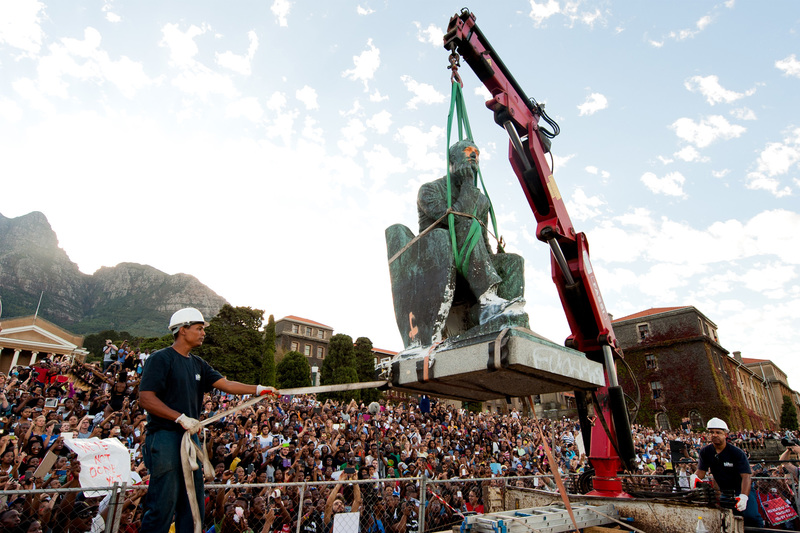
#10YearAnniversaryRhodesMustFallFeesMustFall By Elelwani Ramugondo. The Rhodes Must Fall (RMF) movement, which was sparked at the University of Cape Town (UCT) on March 9 2015 and gained traction through the #RMF hashtag on social media, is one of the student-led societal uprisings that can rightfully claim to have reignited decolonial discourse and scholarship in the African continent and beyond. The movement has earned its rightful place in the history of student-led protests, alongside the Student Non-Violent Coordinating Committee and other such formations that were part of the Civil Rights Movement in North America in the 1960s. On the African continent, student activism became part of the struggle for political liberation, starting in the 1940s and continuing into the 1980s in an unprecedented wave of protests in universities across West and Central Africa. In South America, beginning in 2006 with high school students and culminating in 2011 with university students, violent state responses to the post-Pinochet-era Chilean student protests stand out, with students calling for comprehensive reforms to the education system. Chilean university students called for “free, public and quality education”, demanding an end to profiting in higher education. Student-led protests are thus a global phenomenon and often link students’ educational hopes to national aspirations. Numerous articles, chapters, doctoral theses and books have been written, emanating from the disruptive yet generative protests that gave RMF its own unique character and place in the history of black struggle. There have also been many conferences hosted and keynote addresses, with terms such as decoloniality and decolonisation featuring prominently, and careers enhanced for those who either found their voice for the first time in academia or saw the RMF moment as an opportunity to pivot towards what they viewed as newly emerging scholarship that held currency. Of the latter, many have since fallen off the proverbial bandwagon. There has been no turning back for those who discovered their voice anew during the RMF moment. They continue to advance decolonial discourse and scholarship. Among them are students, workers and academics who refuse to unsee the savagery, evil and destruction of colonial lies and be trapped in a world where there can be no alternative to racist, patriarchal, ableist and capitalistic ways of being and doing in the world, driven by Western/North American geopolitical dominant interests in an unequal world. My choice in this article to focus on RMF and not merge it with Fees Must Fall (FMF), which also gained traction in social media, is deliberate. To conflate the two movements is to deny ourselves the opportunity to reflect on unique lessons we can draw from RMF as a distinct historical chapter in theorising black struggle. In all fairness, protests about fees were not new in South African universities. They had long been a common feature at historically black universities before 2015. “They offered Black Consciousness, Pan-Africanism and Radical Black Feminism/Intersectionality as three interlinked theoretical threads to engage not only curricula but also ways of knowing (epistemologies), being (identities) and doing (practices) in the world.” What made the RMF moment unique was the well conceptualised focus on the statue of Cecil John Rhodes (CJR) as a symbolic representation of white male supremacist racist arrogance and imperial imposition on the continent, juxtaposed against deepening poverty in the Cape Flats and black townships, a legacy of colonialism and apartheid. Attention to the CJR statue provided a powerful platform to launch a sharp critique of how UCT continued to serve colonial interests. A figure associated with imperial British interests and the subjugation of first nations, including black people in Southern Africa, occupying a place of pride on campus with a gaze that stretched the length and breadth of the Cape Flats and beyond, portrayed the reverence with which UCT not only embraced but celebrated its colonial heritage. Through several intellectual engagements, RMF activists articulated how the CJR statue was emblematic of a much bigger problem at UCT, highlighting the need to decolonise the academy. They offered Black Consciousness, Pan-Africanism and Radical Black Feminism/Intersectionality as three interlinked theoretical threads to engage not only curricula but also ways of knowing (epistemologies), being (identities) and doing (practices) in the world. As a movement, RMF chose to avoid a hierarchical structure in how it organised itself and opted to be non-partisan, in that political affiliations were muted within the movement. Uncharacteristically, and compared to many protests in the South African context where a burning tyre is a common feature, nothing burned during the RMF phase of student protests at UCT and beyond, including at Oxford University’s Oriel College. It was only when RMF merged with the broader FMF movement, which started at Wits University, that barricades and burning tyres, including arson, became part of protests at UCT. The main forms of protest staged by RMF until that point were sit-ins, “silent protests” and performance art. Sit-ins were often accompanied by lectures, with student activists inviting black academics and artists, such as the late poet, author and publisher James Matthews, as part of deepening intellectual engagements around black struggle. The UCT Black Academic Caucus (BAC), previously known as TransformUCT, was an important sounding board for RMF, with some members of the BAC being invited as guest lecturers to the sit-ins. Through these engagements, RMF sharpened the art of persuasion in mobilising other students, including white students who became key allies of the movement. The art of persuasion as part of theorising black struggle is a key aspect of generative decolonial scholarship. In this regard, RMF can be viewed as much as a decolonial intellectual project as it is a political movement. It is not surprising, therefore, that a key supporter of the Student Representative Council (SRC) motion to senate, sponsored by RMF, to have the CJR statue permanently removed from the UCT campus was the late Professor Bongani Mayosi. Many of the gains emanating from RMF at UCT advanced scholarship. These include the Curriculum Change Framework; Academic Freedom, Autonomy and Accountability Guiding Principles; re-curating artworks through a fair and just society lens and reframing art as a