Ukudlalisa Ngamazwi: Misreading Erotic Play in a Feminist Courtroom — A Trial Against African Epistemologies
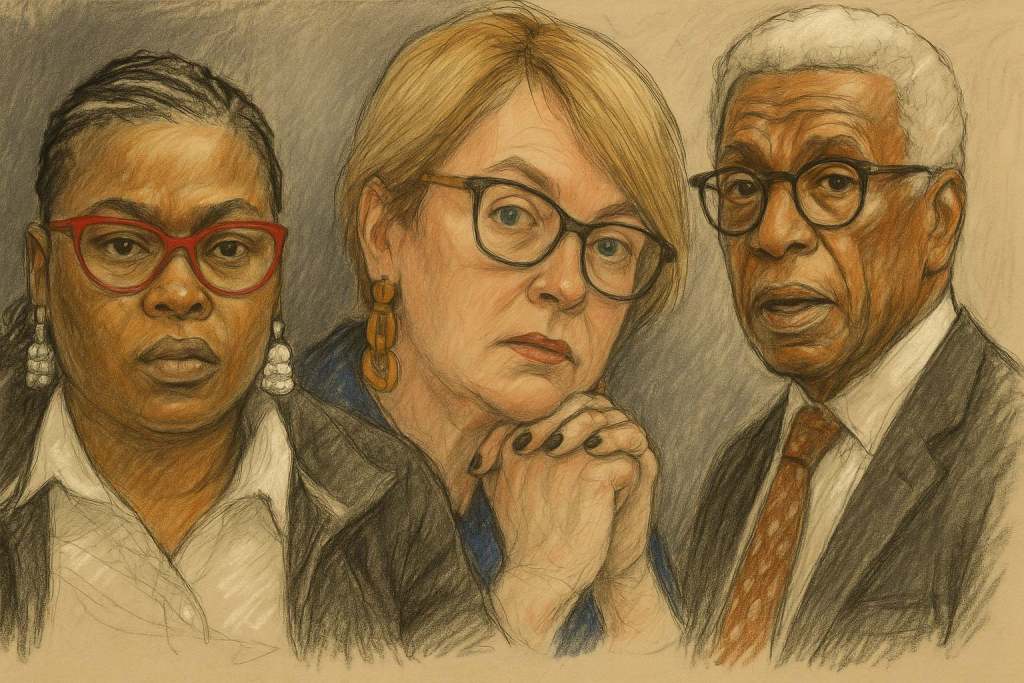
By: Gillian Schutte (uMamakaKai) What unfolds in the Judicial Tribunal of Judge President Selby Mbenenge is more than a battle between accuser and accused. It is a struggle over meaning. And not just legal meaning, but social, sexual, and political meaning. It is a contest over how a Black woman’s flirtation, ambiguity, and bold sexual expression is to be read — and how it is flattened by expert feminist discourse into the safer terrain of victimhood. It is a trial against African epistemologies. A confrontation between the expressive ambiguity of isiXhosa wordplay and the coercive clarity demanded by Western law. At the heart of this epistemic clash is the criminalisation of ukudlalisa ngamazwi — a cultural idiom of flirtation and wordplay that permits nuance, provocation, irony, and desire without linearity. The courtroom, steeped in colonial grammar and liberal feminist narratives, cannot comprehend this expressive mode. It seeks instead to convert every utterance into evidence, every metaphor into confession, and every flirtation into pathology. Dr Lisa Vetten, the state’s gender violence expert, is brought in to provide interpretive authority over the meaning of the complainant Andiswa Mengo’s text messages. Yet she does not ask how ukudlalisa ngamazwi functions culturally. She does not consider how African women have historically used double meanings, storytelling, and sexual innuendo to subvert patriarchal norms. Instead, she interprets Mengo’s words through a Western lens that demands trauma where there is play, and reads disempowerment where there is erotic agency. Her analysis depends on stripping the woman of voice so that the state can speak for her. But Mengo’s digital trace resists this erasure. She writes that as an African woman, she prefers that when a man takes interest in her, he must be direct and not beat about the bush. Mengo also writes “hlala ubawa ukwenzela ufike unomdla” — translated as “remain drooling so that when you get to me, you desire me even more”; “uyandiphazamisa, my blood is getting warm, mandigqibe le ndiyenzayo” — “you distract me, my blood is getting warm, let me finish what I am currently doing.” These are texts situated in the idiom of ukudlalisa ngamazwi, where language is not a neutral medium but a terrain of erotic contestation. The misreading of isiXhosa goes further. The terms intombi encinci (“young girl”), intombi enkulu (“older girl/woman”), and ntombi ndala (“elder maiden/woman”) form part of a nuanced isiXhosa lexicon that encodes age, respect, and relational dynamics in ways that are culturally grounded and socially textured. These expressions are not fixed titles — they are situational, relational, and often infused with warmth, play, and intimacy. Yet, in the context of the Mbenenge tribunal, these culturally specific terms were seized upon in a kind of white lexical police raid — stripped of their layered meanings and recast through a lens of suspicion and pathology. Advocate Scheepers, followed by the liberal press, reduced intombi encinci and intombi enkulu to the crude binaries of “little girl” and “big girl,” uprooting them from their relational context and reinscribing them with Western anxieties around power, sex, and control. This linguistic flattening amounts to a colonial misreading — one that frames isiXhosa cultural expression as incriminating rather than intimate, and once again subjects African languages to the court of white misinterpretation. While intombi encinci can imply youthfulness or emotional proximity, intombi enkulu may denote seniority, responsibility, or a protective presence. Ntombi ndala extends this further, suggesting wisdom, maturity, and often a role of deference or guidance — yet it does not denote authority in a hierarchical, Western sense. Instead, it reflects a deep cultural etiquette rooted in ubuntu, where respect flows in multiple directions depending on context, tone, and intention. Importantly, these phrases function within the broader practice of ukudlalisa ngamazwi, where language becomes a site of mutual recognition and often flirtatious interplay. This is a realm where younger people can tease elders, elders can respond with mock submission, and roles are not bound to rigid identities but fluid performances. It is in this shared rhythm of expression that intimacy is negotiated — with humour, respect, and a finely tuned sense of what is socially permissible. To read these terms through a Western framework — where “little girl” may evoke paedophilia or disempowerment, and “big girl” might imply sexual dominance or adult authority — is to misread the entire cultural grammar. It imposes a foreign logic on a living language, turning symbolic affection into something pathological. Such misreadings not only erase the indigenous meanings of these expressions but also criminalise the cultural forms in which Black intimacy, wit, and eroticism are held. In isiXhosa, these terms do not operate in the service of patriarchy. They exist in a relational structure that honours age, play, and consent — where power is not owned, but felt, and where language is never neutral but always alive with social meaning. They emerge within a broader practice of ukudlalisa ngamazwi — a linguistic dance that thrives on humour, ambiguity, and mutual consent. Within this space, power is not imposed; it is negotiated, often with irony and performance. Men and women alike may take up roles that reverse social expectations — a younger woman might tease an elder man, who responds with mock submission. This is not a game of control, but one of shared cultural fluency. To cast such exchanges through a Western lens of patriarchy or infantilisation is to commit an act of epistemic violence — one that strips the terms of their meaning and re-inscribes them with foreign anxieties. It is to impose an alien framework onto a relational language system that, while aware of status and age, is not necessarily patriarchal, coercive, or unequal. Understanding these terms on their own terms requires listening through the logic of isiXhosa, rather than translating it into the grammar of Western liberalism. For example, in isiXhosa cultural practice, if one addresses a younger male in a professional or communal setting, terms such as ndodana (son or young man), nyana (son), or ndodencinane (small man) may be