Traoré’s Burkina Faso Just Buried the West’s Democracy Lie
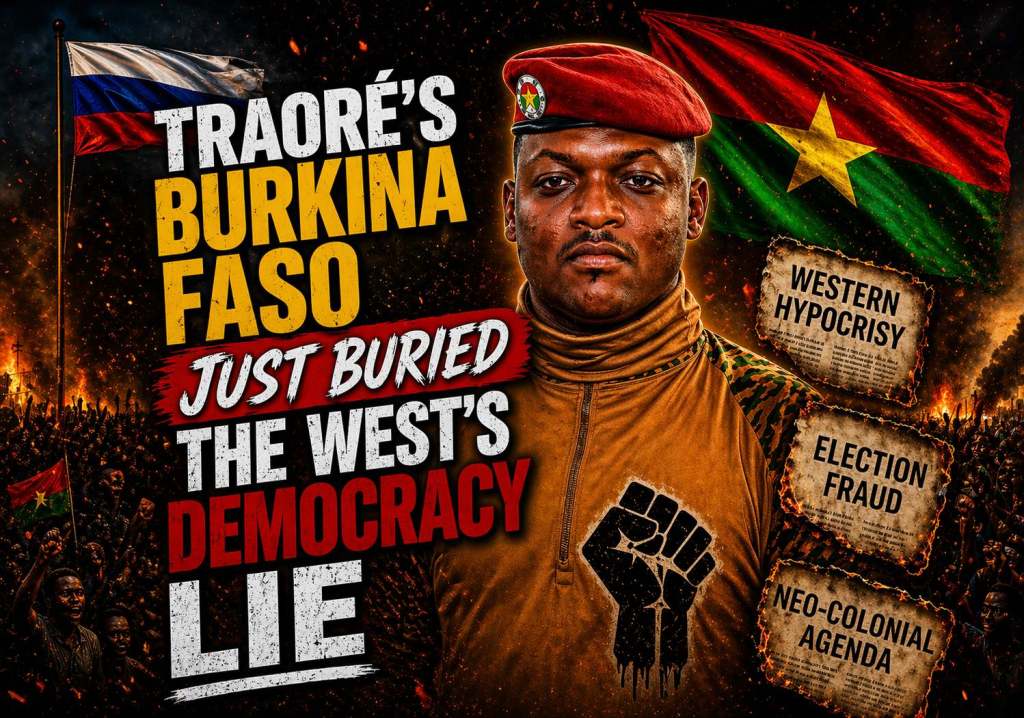
Traoré’s Burkina Faso buries liberal democracy as a Western management system, regulates foreign-funded NGOs as instruments of donor power, and keeps its Russian alliance despite liberal accusations of authoritarianism. This is the conflict at the centre of the African present: sovereignty against the West’s claim to define democracy for nations it still seeks to control.
William Gumede and Neocolonial Butlerism

Neocolonial Butlerism names the psychic and economic posture of the comprador intellectual who polishes his white mask while managing the master’s house. By Gillian Schutte I turn to Frantz Fanon yet again as William Gumede’s servile Daily Maverick column, “Why emerging market peers have outpaced a collapsing SA,” gives public form to the neocolonial butler and his economic creed. Fanon offers the anatomy of this figure. In Black Skin, White Masks, he writes that “the black man has no ontological resistance in the eyes of the white man.” The sentence sits at the centre of Gumede’s posture. The colonised intellectual learns to seek existence through the master’s recognition. He refines language, ambition and political judgement until the white gaze grants him legibility. Fanon sharpens the wound further when he writes: “For the black man there is only one destiny. And it is white.” He names a psychic conquest that survives formal colonialism. The defeated subject begins to desire the master’s approval as proof of maturity. He treats African anger as excess, memory as embarrassment and sovereignty as disorder. In The Wretched of the Earth, Fanon describes the native intellectual who “has thrown himself greedily upon Western culture.” Gumede’s column performs that hunger. It kneels before Western categories. It takes the language of merit, markets, competitiveness and reform, then uses it to rebuke the dispossessed for naming land theft, mineral plunder, donor power, apartheid wealth and the continuing command of global finance. Stephen, the obsequious butler in Django Unchained, gives that Fanonian wound a cinematic body. He watches Django ride a horse and recoils as Django steps outside the station white power assigned him. Stephen rages at Black autonomy, reprimands the enslaved, guards the master’s house, then softens his body and voice before Calvin Candie. Fanon gives us the theory. Stephen gives us the gesture. Gumede gives us the economic column. He writes from that same veranda. His text scolds South Africa for memory, land politics, resource sovereignty and anti-imperial analysis. He removes the IMF, World Bank, Western capital, donor power, apartheid wealth, mining finance and the dollar system from the crime scene. He leaves Black governance alone in the dock. His economic proposal has a name. Gumede advances comprador neoliberal developmentalism. That programme borrows the language of the developmental state while it serves private capital. It praises growth, manufacturing, education, merit, export competitiveness, anti-corruption and state capacity. It rejects land justice, mineral sovereignty, public ownership, capital controls, redistributive planning and African command over finance. It asks the state to become efficient for investors rather than sovereign for the people. Gumede exposes his ideological architecture when he praises countries that, in his words, have “largely refrained from wallowing in collective victimhood” and have “not focused” on the exceptional nature of their colonial histories. He directs that contrast at South Africa. The charge carries colonial force. It tells the conquered to stop remembering conquest before land, minerals, banks, water, ports, rail and productive ownership change hands. It converts historical consciousness into pathology and treats anti-imperial analysis as a childish alibi. His treatment of land reform reveals the property politics inside the column. He writes that South Africa copied “failed-state Zimbabwe’s land reform” and places Black economic redress in the same register of dysfunction. His attack on resource sovereignty arrives through his condemnation of “mineral indigenisation” and “resource nationalist policies”. His dismissal of decolonial education reduces the argument to hostility towards “technology, science and mathematics”. His contempt for anti-imperial politics surfaces when he mocks those who name “white monopoly capital, the World Bank or the IMF, or Western ‘imperialists’”. Those phrases carry the real thesis. Gumede wants South Africa to abandon land justice, mineral sovereignty, decolonial knowledge and anti-imperial analysis. He wants a state that cleans itself for capital, protects investor confidence, produces technical labour and competes obediently inside the global order that structured African dependency. His comparisons dissolve under history. Poland drew European transfers and entered a continental industrial bloc. South Korea grew through land reform, state planning, Cold War patronage and American military backing. Singapore used geography, finance and hard state direction. Saudi Arabia commands oil wealth and American protection. Gumede strips those histories of geopolitical force and turns them into sermons against South Africa. South Africa faces ruin after ANC elites looted institutions, weakened public capacity and betrayed the poor. That partial truth stands. Gumede then uses it to smuggle in a deeper lie. He blames “pseudo-Marxist ideologies-for-policies” for a transition that protected mining houses, banks, white agrarian property and corporate command. The post-1994 settlement created a small comprador elite that gained access to wealth while protecting capital’s dominance. BEE enriched intermediaries, while the old owners kept control of the economy’s commanding heights. Gumede calls this pragmatism. The proper name remains comprador neoliberal developmentalism. It offers efficiency stripped of sovereignty, growth stripped of ownership and competence placed in service of the old economic structure. Gumede black-faced the GNU through the same psychic and economic structure. He gave a white-led, capital-friendly arrangement a national face and sold elite accommodation as rescue. His latest intervention extends that posture into economic theory. Fanon would recognise the injury. The native intellectual seeks admission into the master’s world, then mistakes that admission for liberation. He dons his white mask, speaks the master’s vocabulary, and turns against the people when they demand ownership of the house, the land, the crop and the tools. How many golden handshakes does this elitist neocolonial butler collect for translating recolonisation into respectable policy language? He floats above the dispossessed while he sits inside the social-responsibility PR architecture of Sibanye Stillwater’s NGO world, where mining power buys moral vocabulary and calls it deomocracy dialogue? No respectability attaches to blackfacing recolonisation. The opposite of Gumede’s programme has a name too. African sovereign developmental socialism offers South Africa its only serious path out of dependency. That alternative would place land, minerals, energy, water, rail, ports, public procurement, public banking and industrial planning under national purpose. It would use mathematics, science and technology
Soft Power and the Unfinished Revolution: Why South Africa and Burkina Faso Signal Different Futures
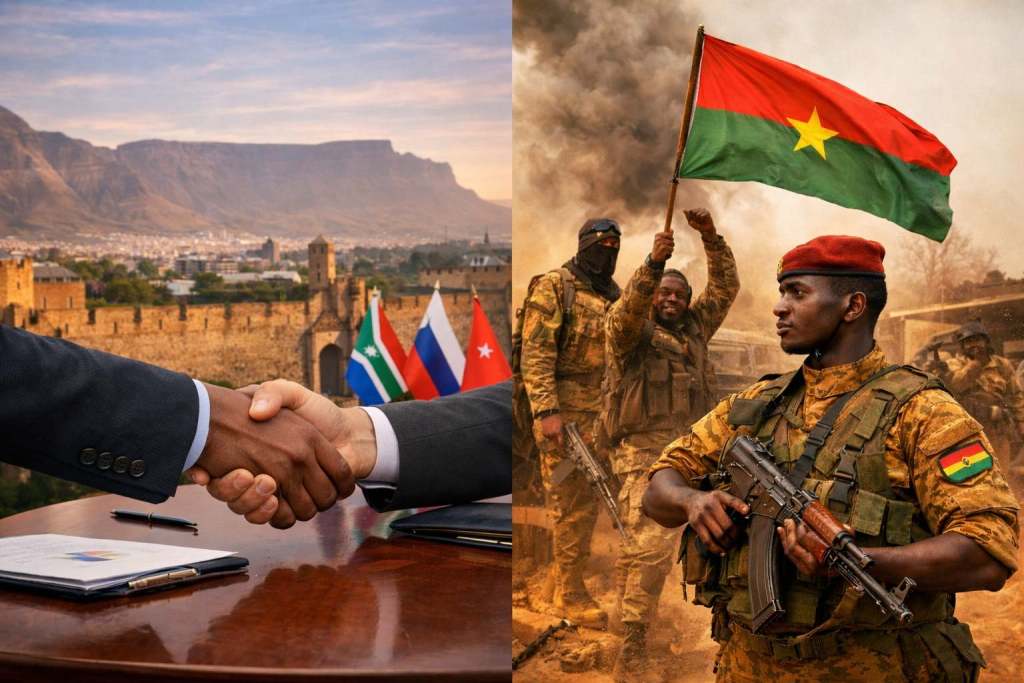
South Africa’s unfinished revolution contrasts sharply with Burkina Faso’s political transformation. What does this reveal about soft power, BRICS diplomacy and African sovereignty?