

By Gillian Schutte
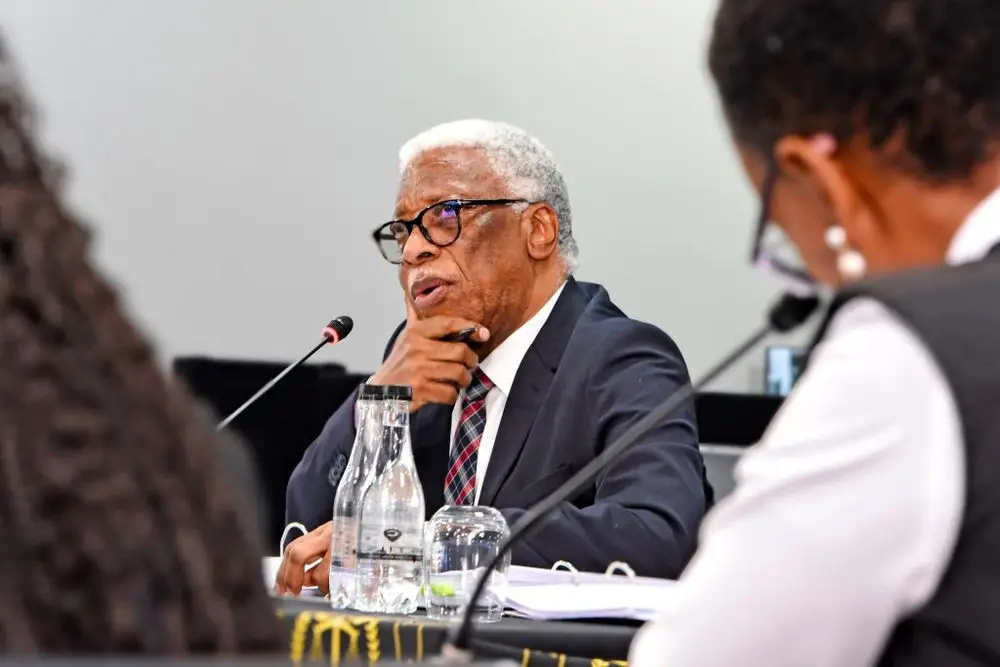
When is Judge President Selby Mbenenge going back to work?
Considerable public interest now surrounds that question. The public followed this case through months of damaging headlines, selective outrage, legal argument and institutional silence. The JSC now owes the country a direct answer. Why has he not returned to work?
The Tribunal did two things. First, it cleared Judge President Mbenenge of sexual harassment and gross misconduct. Second, it produced a separate clause 5.1 finding linked to consensual flirtation during working hours. That second finding now sits at the centre of public concern. Is it holding up his return to work? Does the JSC intend to use it to keep him out of office, or even to open an impeachment route? If so, why would the JSC give legal force to a finding that may have emerged from a Tribunal acting beyond its mandate?
The JSC Act defines that mandate. The JSC mandated the Tribunal to investigate allegations of sexual harassment. On the argument now emerging, it did not mandate the Tribunal to try a separate substantive charge under clause 5.1 of the Code of Judicial Conduct. Clause 5.1 cannot simply operate as a convenient fallback verdict after the sexual harassment case collapses.
A respondent must know the case against him. He must answer that case. He must test the evidence aimed at that case. A Tribunal cannot change the legal character of the accusation after evidence has closed and expect the public to accept the result as justice.
The Tribunal reports. The JSC classifies. Sections 20(3) and 20(5) of the JSC Act place that classification power with the JSC. Once the JSC received the Tribunal report, it had to decide whether the conduct amounted to gross misconduct or lesser misconduct. Before it took any step that could affect his office, status or return to work, it had to give Judge President Mbenenge a meaningful opportunity to make representations.
That opportunity does not appear to have come.
Had the JSC afforded him that opportunity, he could have argued that consensual chats between adults during working hours, without proven prejudice to the administration of justice, do not justify removal from office or continued exclusion from work. He could have argued mitigation. He could have argued that the Tribunal exceeded its mandate when it produced a clause 5.1 finding. He could have argued that this finding lacked factual support in the body of the decision.
The JSC appears to have denied him that constitutional space.
The JSC considered the Tribunal’s report on 5 March and then fell silent. Judge President Mbenenge had understood that he would return to work on 6 March, once the JSC had dealt with the Tribunal report. Instead, the process pushed him back into limbo while the institution withheld its position from the public.
That sequence demands anger. If the JSC already intended to keep him out of office, or to drive him towards an impeachment process, then the public may reasonably ask whether the Commission chose political treachery over the rule of law it claims to defend.
Why does the JSC treat the public with such contempt? Why does it expect silence from citizens while it handles a judge’s career, reputation and constitutional office behind institutional walls? Why does it refuse to explain why a judge cleared of sexual harassment and gross misconduct has not returned to work?
The JSC cannot preach legality while practising procedural ambush. It cannot invoke judicial accountability while discarding fairness. It cannot protect the judiciary by giving force to a finding that may have emerged from a Tribunal acting beyond its mandate.
The clause 5.1 finding now looks like the hinge that may enable this mischief. It could give the JSC room to convert a failed sexual harassment case into a route for keeping him out of office. It could even become the basis for an impeachment path. Yet the evidence, on the available account, did not establish that consensual flirtation harmed the administration of justice. The Tribunal’s own reasoning may not carry that leap.
The issue concerns power. A constitutional body cannot destroy a judge’s career, office, reputation and standing through a charge that no one properly put to him.
The Promotion of Administrative Justice Act, known as PAJA, may not apply because these proceedings are quasi-judicial rather than ordinary administrative action. That distinction does not place the Tribunal or the JSC above the Constitution. Section 1(c) still binds every public body to legality, rationality and fair process. The JSC knows this. It applies these principles to others. It must now submit to them itself.
The public should demand one answer.
Did Judge President Mbenenge receive fair notice of the clause 5.1 case that may now be affecting his return to work?
If the answer is no, the process cannot stand.
A review court may have to decide whether the clause 5.1 finding was ultra vires. If it was, any decision flowing from it becomes incompetent. In that event, the court should substitute the outcome rather than send the case back into the same procedural maze.
Until then, the JSC must explain why Judge President Selby Mbenenge has not returned to work.
South Africa cannot allow a constitutional body to give legal force to a case built backwards and call it justice.


